
Knitting and Fabric Processing for Knitwear Apparel
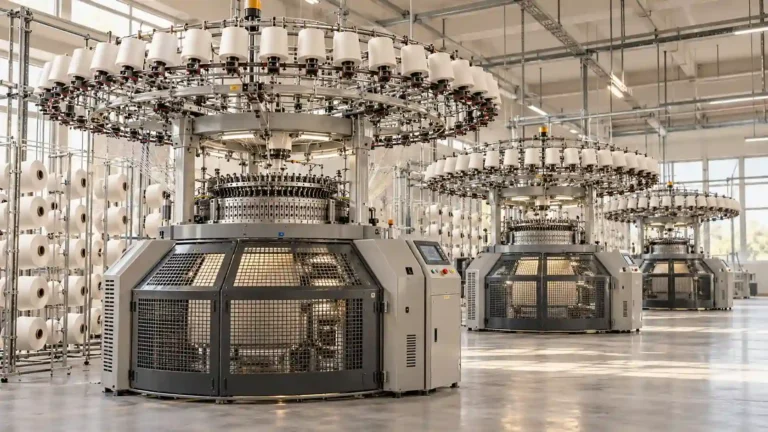
Our support focuses on converting suitable yarns into knitted fabric constructions and garment components according to buyer specifications. We assist with yarn selection, knitting construction, machine suitability, fabric weight, technical development, knitting-stage quality control and bulk production coordination.
From single jersey fabrics for T-shirts to interlock, rib, pique, French terry and customized flat-knitted polo collars, Mirthuni Apparel helps buyers develop commercially feasible knitted fabric solutions for their apparel collections.
Knitting and Fabric Processing in Tiruppur, India
Tiruppur is an established knitwear manufacturing centre with access to spinning mills, circular knitting facilities, flat knitting specialists and fabric development resources. Mirthuni Apparel coordinates knitting requirements through selected manufacturing partners rather than representing all production facilities as company-owned.
Knitting is the process of forming fabric or garment components through interconnected yarn loops. Machine type, knitting structure, yarn count, gauge, stitch length and knitting density influence fabric appearance, extensibility, weight and dimensional characteristics.
Our knitting and fabric processing support includes reviewing technical specifications, selecting suitable knitting methods, coordinating development samples, checking greige fabric quality and planning bulk knitting requirements.
Circular Knitting for Knitwear Apparel
Circular knitting is widely used to manufacture weft-knitted fabrics for T-shirts, polo shirts, sweatshirts, hoodies, joggers, knitted shorts, loungewear, sleepwear and children’s clothing.
In circular knitting, needles arranged around a cylinder form interconnected loops of yarn. Depending on the machine configuration, circular knitting can produce single-knit, double-knit and specialty fabric constructions. Fabric may be produced in tubular form or opened for subsequent manufacturing operations.
Single Jersey Circular Knitting
Single jersey is a widely used knitted fabric construction for regular-fit T-shirts, oversized T-shirts, casual tops and lightweight knitwear. It typically has distinct technical face and back surfaces, with fabric characteristics influenced by yarn selection, stitch length and knitting density.
Single jersey can be developed using combed cotton, compact cotton, organic cotton, cotton-modal and other suitable yarn compositions. Elastane-containing variations may also be evaluated where additional stretch and recovery are required.
Interlock and Double Jersey Knitting
Interlock is a double-knit construction commonly considered for premium tops, children’s garments, loungewear and garments requiring a more substantial fabric structure. Compared with conventional single jersey, interlock generally provides a more balanced construction and a different fabric hand and dimensional behaviour.
Other double-knit structures may also be developed depending on the required appearance, fabric weight, extensibility and machine capability. Interlock and rib must be treated as distinct constructions when preparing technical specifications and quality approvals.
Rib Knitting
Rib knitting produces alternating face and reverse stitch columns. Common constructions include 1×1 rib and 2×2 rib, with additional variations available according to machine capabilities.
Rib fabrics are suitable for fitted tops, neckbands, cuffs, waistbands and other garment components requiring extensibility. Recovery performance depends on construction, yarn composition, knitting density and the use of elastane where applicable.
Pique and Honeycomb Knitting
Pique and honeycomb constructions create textured knitted surfaces and are frequently considered for polo shirts and selected casualwear products. Their distinctive surface characteristics can be achieved through different stitch arrangements and knitting techniques.
Buyers can specify the desired texture, fabric weight, yarn composition and reference sample so that an appropriate construction can be evaluated with the knitting partner.
French Terry and Fleece-Base Knitting
French terry fabrics commonly feature a knitted face and looped reverse structure. They are widely used for sweatshirts, hoodies, joggers, knitted shorts and casual knitwear.
Depending on the desired construction, two-thread and three-thread knitting arrangements may be evaluated. Yarn selection, loop structure, machine configuration and knitting density influence the resulting greige fabric characteristics.
Fleece-base fabrics can be knitted for subsequent brushing or other finishing operations. The knitting stage develops the base fabric structure; brushing and finishing are separate manufacturing processes.
Flat Knitting for Collars, Cuffs and Knitwear Components
Flat knitting is an important manufacturing process for shaped knitted components used in knitwear apparel. Unlike conventional circular knitting, flat knitting machines use needle beds that allow controlled formation of knitted panels, collars, cuffs and other components.
Mirthuni Apparel coordinates flat knitting requirements through selected manufacturing partners, particularly for customized polo shirt collars, sleeve cuffs, ribbed trims and other suitable knitted components.
Flat-Knitted Polo Shirt Collars
Flat-knitted collars are widely used in polo shirt manufacturing. They can be developed with customized dimensions, rib constructions, tipping stripes, contrast colours and jacquard patterns.
Collar development considers yarn count, machine gauge, knitting structure, collar length, collar depth, neckline compatibility and the required finished appearance.
Flat-Knitted Sleeve Cuffs
Flat knitting supports customized sleeve cuffs for polo shirts and selected knitwear garments. Cuffs can incorporate rib patterns, tipping details, contrast colours and specific dimensions to coordinate with the approved garment design.
The required stretch, recovery, structure and visual appearance are reviewed during component development. Collar and cuff samples should be approved before bulk production.
Jacquard and Tipping Designs
Selected flat knitting machines can produce jacquard patterns, knitted motifs, colour combinations and tipping stripes. The achievable design depends on machine capability, yarn selection, pattern repeat, component dimensions and production feasibility.
Flat Knitting Technical Specifications
- Yarn composition and yarn count
- Machine gauge and needle-bed configuration
- Collar length, depth and shape
- Cuff width, depth and construction
- Rib ratio and knitted pattern
- Tipping stripe placement and colour combinations
- Jacquard pattern and repeat requirements
- Dimensional tolerance and recovery requirements
- Approved component samples and bulk quantities
Specialty Knitted Fabric Constructions
Waffle Knitting
Waffle knitted fabrics feature a textured, cellular surface formed through the knitting structure. They may be considered for loungewear, casual tops and selected textured apparel applications.
Jacquard Knitting
Jacquard knitting allows patterns to be incorporated into the knitted structure rather than applied as surface printing. Pattern complexity, yarn selection and machine suitability influence development feasibility.
Slub Jersey Knitting
Slub jersey is developed using yarn with intentional variations in thickness. These variations create an irregular visual texture that may be suitable for fashion T-shirts and casual knitwear.
Pointelle Knitting
Pointelle knitting incorporates decorative openings and patterns into knitted fabric. It is commonly considered for lightweight fashion tops, loungewear and selected children’s clothing designs.
Advanced Knitting Techniques and Engineered Fabric Development
Elastane and Spandex Integration During Knitting
Elastane, also known as spandex, can be incorporated directly during the knitting process to develop stretch fabrics with improved recovery. Depending on the fabric construction and buyer requirements, elastane may be introduced through plating or other suitable yarn-feeding arrangements. The elastane percentage, yarn tension and stitch parameters are controlled to achieve the required stretch, fit and dimensional characteristics for knitwear apparel.
Plated, Double-Face and Multi-Layer Knitted Fabrics
Plating techniques allow different yarns to be positioned on the technical face and reverse of knitted fabrics, creating different surface characteristics within a single construction. Specialized double-knit and multi-layer constructions can also combine different yarns or structures on opposite sides. Certain engineered constructions incorporate polyester or other suitable yarns between outer knitted layers to create a cushioned or quilted-like fabric effect. These constructions require appropriate knitting machinery and technical development.
Yarn-Dyed Stripes and Engineered Knitted Patterns
Yarn-dyed fabrics use yarns coloured before knitting, allowing stripes, colour combinations and selected patterns to be formed directly during fabric production. Circular knitting machines with suitable yarn-feeding and stripe-control systems can produce regular, unequal or engineered stripe arrangements. More complex knitted designs may require jacquard or other specialized knitting capabilities. Pattern repeats, colour placement and stretch requirements are evaluated during development.
Custom Fabric Structures Developed During Knitting
Mirthuni Apparel coordinates custom knitting developments involving elastane-plated fabrics, double-face constructions, multi-layer structures, yarn-dyed stripes and engineered knitted patterns through selected manufacturing partners. Development feasibility depends on yarn composition, machine capability, fabric construction, target GSM, design repeat and minimum production quantities.
Knitted Fabric Construction and Apparel Applications
| Knitting Construction | Typical Apparel Applications | Technical Considerations |
|---|---|---|
| Single jersey | T-shirts and casual tops | Yarn count, stitch length, GSM |
| Interlock | Premium tops, kidswear, loungewear | Double-knit structure, density, weight |
| Rib | Fitted tops, cuffs, neckbands | Rib ratio, extensibility, recovery |
| Pique and honeycomb | Polo shirts and casualwear | Surface texture, knitting density |
| French terry | Hoodies, sweatshirts, joggers | Loop structure, yarn feeds, GSM |
| Waffle and jacquard | Textured apparel and loungewear | Pattern, gauge, machine suitability |
| Slub and pointelle | Fashion tops and lightweight knitwear | Yarn variation, decorative structure |
| Flat-knitted collars and cuffs | Polo shirts and knitwear components | Dimensions, rib, tipping, jacquard |
Yarn Selection for Knitted Fabric Production
Yarn selection plays a central role in knitting performance and fabric characteristics. Mirthuni Apparel coordinates the sourcing and evaluation of combed cotton, compact cotton, organic cotton, Supima cotton, cotton-modal, bamboo viscose blends, lyocell blends and other suitable yarn compositions.
Technical considerations include yarn count, fibre composition, yarn uniformity, strength, hairiness, machine compatibility and the intended fabric construction.
For detailed information about raw materials, visit our Fibres and Yarns resource.
Fabric GSM, Yarn Count, Machine Gauge and Stitch Length
Knitted fabric development requires coordination between yarn specifications and machine parameters. These factors influence fabric weight, appearance, width, extensibility and knitting performance.
Fabric GSM
GSM means grams per square metre and is used to specify fabric weight. Target GSM should be considered together with yarn count, knitting construction, stitch length and the expected change between greige and finished fabric.
Yarn Count
Yarn count describes yarn fineness. Cotton yarns may be specified using the English cotton count system, such as 20s, 24s, 30s or 40s Ne. The appropriate count depends on the required construction, fabric characteristics and machine configuration.
Machine Gauge
Knitting machine gauge refers to needle density and influences the range of yarns and structures that can be processed. Machine suitability must be evaluated according to the intended fabric or component.
Stitch Length
Stitch length is an important knitting parameter affecting loop geometry, fabric density, extensibility and greige fabric characteristics. It is established during development in combination with yarn and machine specifications.
Custom Knitted Fabric Development
Mirthuni Apparel supports custom knitted fabric development for brands requiring specific weights, textures, structures or yarn combinations. Development may involve reviewing reference swatches, selecting suitable knitting machinery and conducting trials to establish workable specifications.
Custom development is subject to yarn availability, machine capability, trial requirements, minimum knitting quantities and commercial feasibility. Where appropriate, approved reference fabrics and technical specifications are used as production benchmarks.
Knitting Process Quality Control
Knitting-stage inspection helps identify construction and production defects before fabric proceeds to subsequent manufacturing operations. Mirthuni Apparel coordinates quality checks through selected knitting partners according to the buyer’s technical requirements.
Common Knitting-Stage Quality Checks
- Yarn identification and consistency
- Fabric construction and stitch formation
- Stitch length and knitting density
- Greige fabric GSM and width
- Needle lines, holes and dropped stitches
- Yarn contamination and visible irregularities
- Barre and other appearance variations
- Roll identification and batch traceability
- Collar and cuff dimensions
- Flat-knitted component pattern consistency
Inspection methods, tolerances and acceptance criteria are agreed according to the fabric construction, buyer specifications and applicable testing requirements.
Bulk Knitting Production and Sourcing Coordination
Following development and sample approval, Mirthuni Apparel coordinates bulk knitting requirements with selected manufacturing partners. Production planning considers yarn procurement, machine availability, fabric construction, estimated quantities, quality requirements and delivery schedules.
Minimum knitting quantities depend on the yarn type, construction, machine configuration and whether the requirement involves standard fabric or a custom development. Commercial terms and production feasibility are reviewed before confirmation.
Knitted Fabric Solutions for International Apparel Buyers
Mirthuni Apparel supports international apparel brands, importers, retailers and private-label clothing businesses seeking knitted fabric manufacturing and sourcing coordination in India.
Our role is to help buyers translate design requirements into suitable knitting specifications, coordinate development through selected manufacturing partners and support production planning and quality verification.
Request Knitting and Fabric Processing Support
To discuss your knitting requirements, please provide the intended garment type, yarn composition, yarn count if known, required knitting construction, target GSM, fabric width, quantity, reference swatches and any applicable technical specifications.
For flat-knitted collars and cuffs, include component measurements, rib construction, tipping stripe details, colours, jacquard artwork and approved garment references where available.
Visit Mirthuni Apparel to learn more about our apparel manufacturing and sourcing support or contact our team to discuss your project.
Frequently Asked Questions About Knitting and Fabric Processing
1. What knitting and fabric processing services does Mirthuni Apparel provide?
Mirthuni Apparel coordinates circular knitting, flat knitting, knitted fabric development, yarn and construction selection, knitting-stage quality checks and bulk knitting production through selected manufacturing partners in Tiruppur, India. Services are tailored to the technical requirements of international apparel brands and private-label buyers.
2. What is the difference between circular knitting and flat knitting?
Circular knitting commonly produces continuous tubular knitted fabric using needles arranged around a cylinder. It is widely used for jersey, rib, interlock, pique and French terry fabrics. Flat knitting uses needle beds to produce knitted panels and shaped components and is particularly useful for customized polo collars, cuffs and selected knitwear components.
3. What types of knitted fabric constructions can Mirthuni Apparel source?
Mirthuni Apparel supports sourcing and development enquiries for single jersey, interlock, double jersey, rib, pique, honeycomb, French terry, fleece-base, waffle, jacquard, slub and pointelle knitted fabrics. Availability and development feasibility depend on yarn specifications, machine capabilities, fabric weight and required quantities.
4. Can Mirthuni Apparel develop customized flat-knitted polo collars and cuffs?
Yes. Mirthuni Apparel coordinates customized flat-knitted polo collars and cuffs through selected manufacturing partners. Development options may include rib constructions, tipping stripes, contrast colours, jacquard patterns and custom dimensions, subject to yarn availability, machine capability, approved samples and minimum production quantities.
5. What knitted fabrics are suitable for premium and heavyweight T-shirts?
Premium and heavyweight T-shirts may use single jersey, interlock or other suitable knitted constructions. Fabric selection depends on the required GSM, yarn composition, hand feel, structure, fit and garment design. Mirthuni Apparel helps buyers evaluate suitable yarn counts and knitting specifications before bulk production.
6. Can Mirthuni Apparel source French terry and heavyweight knitted fabrics?
Yes. Mirthuni Apparel supports French terry and heavyweight knitted fabric sourcing for sweatshirts, hoodies, joggers and related knitwear apparel. Two-thread and three-thread constructions may be evaluated depending on the desired fabric structure, weight and production feasibility. Brushing and finishing operations are separate from the knitting process.
7. How do yarn count, machine gauge and stitch length affect knitted fabric?
Yarn count describes yarn fineness, machine gauge relates to needle density, and stitch length influences loop geometry and knitting density. Together with the knitting construction and yarn composition, these parameters affect fabric weight, appearance, extensibility and production performance. Development trials may be required to establish suitable specifications.
8. Does Mirthuni Apparel support custom knitted fabric development?
Yes. Mirthuni Apparel coordinates custom knitted fabric development using buyer specifications, reference swatches and suitable yarn and knitting options. Development may involve trials to evaluate fabric construction, weight, texture and machine compatibility. Feasibility depends on material availability, knitting capability, minimum quantities and technical requirements.
9. What quality checks are performed during knitted fabric production?
Knitting-stage quality checks may include fabric construction verification, stitch formation, stitch length, greige GSM, fabric width, needle lines, holes, dropped stitches, yarn irregularities, roll identification and batch traceability. Flat-knitted collars and cuffs may also be checked for dimensions and pattern consistency. Inspection requirements depend on the buyer’s specifications.
10. What information is needed to request knitted fabric manufacturing and sourcing support?
Buyers should provide the intended garment category, fibre composition, yarn count if available, fabric construction, target GSM, required width, estimated quantity and reference swatches or technical specifications. For flat-knitted collars and cuffs, component dimensions, rib structure, colours, tipping designs and jacquard artwork are also helpful. Mirthuni Apparel can then evaluate sourcing and development feasibility.