Fabric Dyeing, Washing and Finishing for Knitwear Apparel
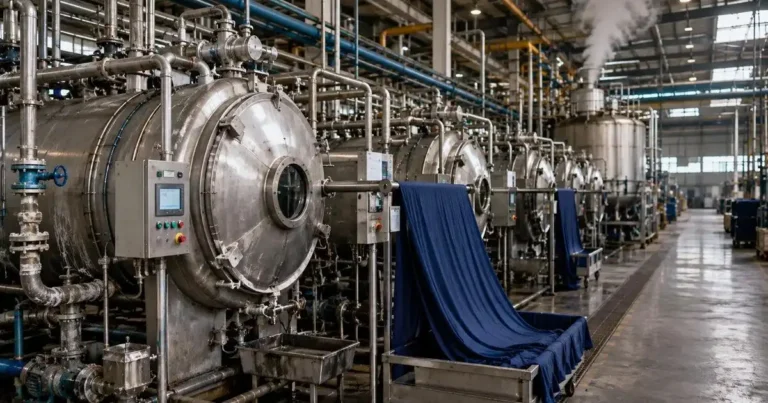
Mirthuni Apparel Sourcing Service provides fabric dyeing, washing and finishing coordination for international clothing brands, apparel importers and private-label knitwear businesses. Based in Tiruppur, India, we work with selected textile processing partners to develop colours, surface finishes, dimensional stability and performance characteristics according to buyer specifications.
Our support covers reactive dyeing, selected pigment colouration techniques, yarn-dyed programmes, garment dyeing, bio-polishing, silicone softening, specialty garment washes, compacting, stenter finishing, brushing, sueding and peaching. Processing methods are selected according to fibre composition, knitted fabric construction, desired appearance, garment application and applicable quality requirements.
Colour consistency, restricted-substance compliance, colour fastness, shrinkage control and reproducible bulk production are central considerations throughout the development process.
Fabric Dyeing and Finishing in Tiruppur, India
Fabric dyeing and finishing convert knitted greige fabric into material suitable for garment manufacturing. The process may include preparation, dyeing, rinsing, washing-off, neutralization, softening, drying, width control, mechanical finishing and inspection.
Mirthuni Apparel coordinates these requirements through selected manufacturing and processing partners. Processing routes are reviewed individually rather than assuming that every technique is suitable for every fibre or knitted construction.
Fabric Preparation Before Dyeing
Successful dyeing begins with suitable fabric preparation. Knitted fabrics may contain natural impurities, knitting oils, processing residues or other substances that affect wetting and dye penetration.
Scouring and Fabric Cleaning
Scouring removes appropriate oils, waxes and impurities to improve fabric wettability and preparation consistency. The treatment is selected according to fibre composition and the required dyeing route.
Bleaching and Optical Preparation
Where necessary, controlled bleaching can improve base whiteness and prepare cotton fabrics for pale or bright shades. Bleaching chemistry, temperature and exposure must be managed to avoid unnecessary fibre damage. Optical brightening is a separate optional treatment where permitted and appropriate.
Heat Setting for Suitable Blends
Some synthetic-fibre or elastane-containing fabrics require controlled heat-setting operations to manage dimensional behaviour. Conditions must be compatible with the yarn composition, stretch properties and intended fabric performance.
Technical Note: Fabric Preparation
Preparation quality influences shade uniformity, dye uptake, staining risk and subsequent finishing performance. The preparation route must be established before approving the bulk dyeing process.
Reactive Dyeing for Cotton and Cellulosic Knitted Fabrics
Reactive dyeing is an important colouration method for cotton and other suitable cellulosic fibres. Reactive dyes form chemical bonds with the fibre under controlled processing conditions, supporting a broad range of shades and potentially good wash-fastness performance when the dyeing and afterwashing processes are correctly managed.
Reactive dyeing is commonly evaluated for cotton single jersey, interlock, rib, pique, French terry and other suitable knitted constructions.
Key Reactive Dyeing Parameters
- Approved colour standard and laboratory dip
- Dye selection and compatibility with fibre composition
- Liquor ratio and dye concentration
- Salt and alkali addition, where required by the process
- Temperature, processing time and pH control
- Levelness and shade reproducibility
- Rinsing, neutralization and removal of unfixed dye
- Final colour fastness and residual chemical checks
After dyeing, appropriate rinsing and soaping help remove hydrolysed and unfixed dye. This stage is particularly important for minimizing staining and achieving the required wash-fastness performance.
Pigment Colouration and Pigment Dyeing Effects
Pigment colouration differs from reactive dyeing because pigments generally do not chemically bond to cotton fibres in the same way. Pigment systems commonly rely on suitable binders and curing conditions to attach colour particles to the textile surface.
Pigment processes can be used to develop vintage, washed-down, faded or surface-coloured effects on suitable fabrics and garments. The appearance and performance depend on pigment chemistry, binder selection, application method, curing and subsequent washing.
Compared with well-controlled reactive dyeing, certain pigment effects may intentionally produce greater colour variation or a worn appearance. Rubbing fastness, wash durability and hand feel require particular attention.
Reactive Dyeing vs Pigment Colouration
| Parameter | Reactive Dyeing | Pigment Colouration |
|---|---|---|
| Colour mechanism | Chemical bonding with suitable fibres | Pigment attachment using suitable binder systems |
| Typical appearance | Uniform, reproducible shades | Uniform or intentionally faded surface effects |
| Main controls | Fixation, rinsing and soaping | Binder, curing and surface durability |
| Testing focus | Washing, rubbing and shade consistency | Rubbing, washing and binder durability |
Other Fibre-Specific Dyeing Methods
Disperse Dyeing for Polyester Components
Polyester-containing fabrics may require disperse dyeing under suitable temperature and process conditions. Cotton-polyester blends may need a combined or sequential dyeing route to colour both fibre components appropriately.
Dyeing of Modal, Viscose and Lyocell Blends
Regenerated cellulosic fibres such as modal, viscose and lyocell can be coloured using suitable cellulosic dyeing systems. Processing conditions must account for the particular fibre’s wet behaviour, sensitivity and dimensional characteristics.
Elastane-Containing Knitted Fabrics
For cotton-elastane and other stretch fabrics, dyeing temperatures, chemical conditions and mechanical tension must be managed to preserve the required elasticity and recovery. The dyeing process is selected primarily according to the dyeable fibre components.
Yarn Dyeing for Stripes and Engineered Knitwear Designs
Yarn dyeing takes place before knitting and allows coloured yarns to be used directly during fabric construction. It is particularly relevant for yarn-dyed striped T-shirts, polo shirts, rib structures, jacquard patterns and engineered colour designs.
Depending on yarn type and programme requirements, yarns may be dyed in suitable package or hank forms. The dyed yarns are then prepared for knitting using the required colours and yarn counts.
Yarn-Dyed Stripe Development
Stripe designs may include equal-width stripes, unequal-width stripes, repeat patterns, multicolour arrangements and engineered placements. Stripe dimensions must be translated into machine-feeding instructions and knitting repeats.
Colour and Yarn Consistency
Yarn-dyed programmes require coordination of shade matching, yarn count, colour sequence, yarn availability and knitting compatibility. Special attention is required where elastane, plated yarns or multiple fibre compositions are used.
Yarn dyeing is a separate colouration stage, while the stripe or engineered pattern is formed during knitting. Mirthuni Apparel coordinates both stages through suitable manufacturing partners.
Garment Dyeing for Finished Knitwear
Garment dyeing colours garments after they have been cut and sewn, rather than dyeing the fabric before garment construction. It can be used for selected T-shirts, sweatshirts, shorts and other knitwear garments where the design, fibre composition and sewing components are compatible with the process.
Garment dyeing can create distinctive colour depth, seam character and washed appearances. However, the process requires careful evaluation of garment measurements, shrinkage, sewing threads, labels, trims and colour uniformity.
Garment Dyeing Considerations
- Fibre and sewing-thread dye compatibility
- Garment construction and seam durability
- Pre-dye and post-dye garment measurements
- Shade variation between garment components
- Risk of creasing, abrasion and uneven colouration
- Approved wash standard and bulk shade tolerance
- Colour fastness and dimensional stability
Bio-Washing and Enzyme Bio-Polishing
Bio-polishing is an enzyme-based treatment commonly used on suitable cellulosic fabrics and garments to reduce surface fuzz and improve smoothness. Cellulase enzymes act on accessible cellulose fibres under controlled conditions.
Bio-washing can help develop a cleaner fabric surface and softer appearance. The enzyme type, concentration, treatment time, pH and temperature must be controlled to avoid excessive strength loss, unwanted weight reduction or uneven treatment.
Silicone Softening and Fabric Hand-Feel Finishing
Silicone softeners are used in selected textile finishing processes to modify fabric hand feel, smoothness and perceived softness. The appropriate formulation depends on fibre composition, fabric construction, target performance and buyer restrictions.
Silicone finishing may be combined with other approved softening systems. Excessive application or unsuitable chemistry can affect absorbency, surface behaviour, shade or subsequent processing, so formulation and dosage should be validated during development.
Specialty Garment Washing and Colour Effects
Selected garment washing techniques can create vintage, faded, distressed or textured appearances. These treatments are typically performed after garment construction and require separate development approval because they can affect colour, garment measurements, fabric strength and surface appearance.
Acid-Wash and High-Contrast Washed Effects
Acid-wash-style effects are generally created through controlled localized colour removal or oxidation techniques, rather than necessarily using an acid. The resulting high-contrast appearance depends on the original colouration, application method and processing controls.
Suitable chemical handling, neutralization, residue removal and fabric-strength testing are essential. The treatment must be evaluated for worker safety, environmental controls and buyer chemical restrictions.
Pigment Spray and Localized Colour Effects
Pigment spray techniques apply colour to selected garment areas to create gradients, shading, aged appearances or other decorative effects. Suitable binders, controlled application and curing may be required.
Spray application should be performed with appropriate exposure controls and approved chemicals. Shade consistency and rubbing fastness must be evaluated.
Denim-Style and Vintage Wash Effects
Denim-inspired wash appearances can be developed on selected knitted garments using compatible washing and colour-reduction methods. The specific technique depends on the base dye system, fabric composition and desired appearance.
These effects should not be assumed to behave identically to conventional woven denim washing. Garment durability, shade reproducibility and dimensional changes must be checked.
Enzyme, Stone and Abrasion-Based Effects
Selected enzyme or mechanical washing techniques may be used to create a worn or softened appearance. Their suitability depends on garment construction and fabric strength. Abrasion-related treatments require careful control to avoid holes, seam damage or excessive strength loss.
Important: Approval of Specialty Wash Effects
Acid-wash-style, pigment-spray and vintage treatments can produce intentional visual variation. Buyers should approve a physical wash standard, acceptable shade range, measurement tolerances and surface appearance before bulk production. Restricted or hazardous processing methods must not be used merely to reproduce a visual effect.
Dye Fixation, Colour Fastness and Chemical Control
Colour fastness is a critical quality requirement for dyed knitwear. Performance depends on dye chemistry, fibre composition, fixation, removal of unfixed colour, finishing chemicals and the conditions of use.
Dye Fixation and Afterwashing
Reactive dye fixation is controlled through the appropriate dyeing chemistry and processing conditions. Thorough afterwashing removes residual unfixed dye. Where technically suitable and permitted, additional dye-fixing agents may be evaluated to improve particular fastness properties.
Fixing agents are not substitutes for correct dye selection, fixation and washing-off. Any proposed chemical treatment must be compatible with the buyer’s restricted-substance requirements and the required fabric performance.
Colour Fastness Testing
- Colour fastness to domestic or commercial laundering
- Dry and wet rubbing fastness
- Colour fastness to perspiration
- Colour fastness to water
- Light fastness where relevant
- Staining of adjacent materials
- Shade consistency between approved standard and bulk lots
Applicable ISO, AATCC or other recognized test methods should be selected according to the destination market and buyer requirements. Passing criteria must be established before production.
AZO-Free Dye Requirements and Restricted-Substance Compliance
Mirthuni Apparel supports buyer requirements for dyes and auxiliaries that comply with applicable restrictions on certain aromatic amines released from azo colourants. Dye selection is coordinated with processing partners and chemical suppliers according to the intended market and product requirements.
The term “azo-free” is commonly used commercially, but it should not be treated as a substitute for documented chemical compliance. Not all azo dyes are prohibited; restrictions apply to specified hazardous aromatic amines and relevant substances under applicable regulations.
Where required, Mirthuni Apparel coordinates supplier declarations, chemical documentation and appropriate laboratory testing. Claims concerning OEKO-TEX, GOTS, ZDHC-related requirements or other standards are made only where the relevant materials, facilities, processes and documentation support them.
Chemical Safety and Buyer Compliance Controls
- Selection of suitable dyes and textile auxiliaries
- Verification against applicable restricted-substance lists
- Review of supplier chemical declarations and safety information
- Controlled dosing and processing conditions
- Appropriate rinsing, neutralization and residue removal
- Colour fastness and relevant chemical testing
- Documented approval before bulk production
Compliance is evaluated against the specific buyer standard and destination-market requirements. Certification or chemical approval is not assumed solely because a supplier describes a product as azo-free.
Compacting for Knitted Fabric Dimensional Stability
Compacting is a mechanical finishing process used on suitable knitted fabrics to help control residual shrinkage and improve dimensional stability. Controlled compression and fabric relaxation can reduce the amount of lengthwise shrinkage that may occur during subsequent laundering.
The process must be adjusted according to fabric construction, GSM, yarn composition and buyer shrinkage tolerances. Compacting cannot guarantee zero shrinkage, and final results should be verified through appropriate laundering tests.
Stenter Finishing and Fabric Width Control
Stenter finishing uses controlled fabric transport, width adjustment, temperature and tension to establish appropriate fabric dimensions and drying conditions. It may be used to support width control, dimensional consistency and selected finishing applications.
For knitted fabrics, excessive tension or unsuitable thermal conditions can affect fabric stability, stretch and hand feel. Stenter settings must therefore be matched to the construction and fibre composition.
Brushed, Sueded and Peach Fabric Finishes
Brushed Fleece Finishing
Brushing mechanically raises surface fibres to create a softer, warmer and more textured fabric surface. It is commonly used on suitable sweatshirt and fleece-base fabrics. Brushing intensity must be controlled to balance softness, fabric strength, pilling behaviour and surface consistency.
Peach Finish
Peach finishing creates a fine, soft surface texture resembling the feel of peach skin. It is generally produced through controlled mechanical surface treatment on suitable fabrics. The effect depends on yarn composition, fabric construction and processing intensity.
Sueding and Emerizing
Sueding or emerizing uses suitable abrasive finishing equipment to create a fine surface nap and smooth hand feel. The process requires careful control to prevent excessive fibre loss, uneven appearance or fabric damage.
Additional Fabric Finishing Considerations
Softening and Relaxation
Mechanical relaxation and compatible softening treatments may be used to establish the desired fabric hand and dimensional behaviour. Process selection depends on construction, fibre type and buyer specifications.
Anti-Pilling Performance
Pilling performance is influenced by fibre characteristics, yarn construction, knitting structure and surface finishing. Suitable process adjustments may improve performance, but testing is necessary to confirm the result.
Moisture and Absorbency Requirements
Finishing chemicals can alter wettability and absorbency. Where moisture absorption or other functional properties are important, finishing systems should be selected and tested accordingly.
Fabric Dyeing and Finishing Process Overview
| Process | Main Purpose | Quality Considerations |
|---|---|---|
| Preparation and scouring | Improve fabric cleanliness and wettability | Uniform preparation, fibre protection |
| Reactive dyeing | Colour suitable cellulosic fibres | Shade, fixation, fastness |
| Pigment colouration | Surface colour and vintage effects | Binder durability, rubbing fastness |
| Yarn dyeing | Pre-coloured yarn for stripes and patterns | Yarn shade and lot consistency |
| Garment dyeing | Colour sewn garments | Measurements, trims, seam appearance |
| Bio-polishing | Reduce surface fuzz | Strength, weight loss, appearance |
| Silicone finishing | Modify fabric softness | Hand feel, absorbency, shade |
| Compacting | Control residual shrinkage | Dimensional stability |
| Stenter finishing | Control width and drying conditions | Width, tension, stretch |
| Brushing and peaching | Develop soft textured surfaces | Pilling, strength, surface consistency |
Laboratory Dips, Shade Approval and Bulk Colour Consistency
Colour development generally begins with a buyer reference, Pantone specification or physical colour standard. Suitable laboratory dips are prepared for shade evaluation before the approved colour is transferred to bulk production.
Bulk dyeing requires control of dye formulation, process conditions, batch consistency and final shade. Colour assessment may use appropriate lighting conditions and instrumental measurements where specified.
Buyer approval should establish acceptable shade tolerances, test requirements and any permitted variation for specialty washed or garment-dyed products.
Final Fabric Inspection and Performance Testing
Following dyeing and finishing, fabrics may be inspected for shade, width, GSM, appearance, defects and dimensional performance. The inspection plan is determined by fabric construction, buyer specifications and agreed quality standards.
Common Final Fabric Checks
- Approved shade and lot-to-lot consistency
- Fabric GSM and usable width
- Dimensional change after laundering
- Spirality or skew where relevant
- Colour fastness to washing, rubbing and perspiration
- Pilling and surface appearance
- Fabric strength where required
- Residual chemical or restricted-substance testing where specified
- Fabric defects and roll identification
Fabric Dyeing and Finishing Sourcing Support for International Buyers
Mirthuni Apparel coordinates fabric dyeing and finishing development for knitwear brands, retailers, importers and private-label clothing businesses. Processing is carried out through selected manufacturing partners according to technical requirements, availability and commercial feasibility.
Our support includes evaluating appropriate colouration and finishing routes, coordinating laboratory dips and wash standards, reviewing technical requirements and supporting bulk production quality controls.
Explore our Fibres and Yarns and Knitting and Fabric Processing resources to understand the preceding material and knitting stages.
Request Custom Fabric Dyeing and Finishing Support
To evaluate a project, buyers should provide the intended garment category, fibre composition, fabric construction, target GSM, colour standards, preferred dyeing method, desired hand feel, wash effects, finishing requirements, estimated quantities and applicable testing or restricted-substance standards.
Physical swatches, approved garments, wash references and technical packs are especially useful for reproducing specific shades and surface finishes.
Contact Mirthuni Apparel to discuss your knitwear dyeing and finishing requirements.
Frequently Asked Questions About Fabric Dyeing and Finishing
1. What fabric dyeing and finishing services does Mirthuni Apparel support?
Mirthuni Apparel coordinates reactive dyeing, selected pigment colouration, yarn dyeing, garment dyeing, bio-polishing, silicone finishing, compacting, stenter finishing, brushing, peaching and specialty garment washing through selected textile processing partners. Services depend on fibre composition, fabric construction, buyer specifications and production feasibility.
2. What is the difference between reactive dyeing and pigment dyeing?
Reactive dyes chemically bond with suitable cellulosic fibres under controlled conditions. Pigment colouration generally uses binders to attach colour particles to the textile surface. Reactive dyeing is commonly selected for uniform cotton shades, while pigment processes may be used for particular surface-coloured or vintage effects. Both require appropriate colour fastness testing.
3. Can Mirthuni Apparel support yarn-dyed stripes and engineered colour patterns?
Yes. Mirthuni Apparel coordinates yarn dyeing and subsequent knitting for striped and engineered knitwear programmes. Colour sequences, stripe repeats, yarn counts and knitting-machine capabilities are reviewed to establish a suitable development and production route.
4. Does Mirthuni Apparel support garment dyeing for T-shirts and sweatshirts?
Yes. Garment dyeing can be evaluated for suitable sewn knitwear garments. Development must account for fibre composition, sewing threads, trims, shade variation, garment shrinkage and final measurements. Samples and approved colour standards are recommended before bulk production.
5. What is the purpose of bio-washing and silicone finishing?
Bio-polishing uses suitable enzymes to reduce surface fuzz on cellulosic fabrics, while silicone finishing uses selected softening formulations to modify fabric hand feel. Both processes require controlled application to avoid undesirable changes in fabric strength, absorbency, colour or performance.
6. Can Mirthuni Apparel develop acid-wash, pigment-spray and vintage effects?
Mirthuni Apparel can coordinate development enquiries for acid-wash-style, pigment-spray and selected vintage garment effects through suitable processing partners. The method depends on the fabric, base colouration, buyer requirements and chemical restrictions. Physical wash-standard approval and appropriate performance testing are required.
7. How are colour fastness and dye fixation controlled?
Colour fastness is managed through suitable dye selection, controlled fixation, effective rinsing and washing-off, and appropriate finishing chemistry. Additional fixing agents may be evaluated where compatible with the process and buyer requirements. Testing can include washing, dry and wet rubbing, perspiration and other relevant conditions.
8. Does Mirthuni Apparel support azo-free dyes and chemical compliance requirements?
Yes. Mirthuni Apparel supports sourcing and processing requirements involving dyes and auxiliaries that comply with applicable restrictions on hazardous aromatic amines and other specified substances. Supplier declarations, relevant chemical documentation and laboratory testing are coordinated where required. Compliance claims depend on verified documentation and the applicable buyer or destination-market standard.
9. What are compacting, stenter finishing, brushing and peach finishing?
Compacting helps control residual knitted fabric shrinkage. Stenter finishing supports fabric width and drying control. Brushing raises surface fibres to create a softer textured appearance, while peach finishing produces a fine, soft surface feel. Each process must be selected according to fabric construction, fibre composition and performance requirements.
10. What information is required to request fabric dyeing and finishing?
Buyers should provide the garment category, fibre composition, fabric construction, GSM, colour references, preferred dyeing process, finishing or washing requirements, estimated quantity and applicable colour fastness or chemical compliance standards. Reference swatches, approved garments and technical specifications help establish development feasibility and quotation requirements.