Custom Apparel Products and Knitwear Manufacturing Support
Mirthuni Apparel Sourcing Service provides custom apparel manufacturing and sourcing support for international fashion brands, retailers, importers and private-label clothing businesses. Based in Tiruppur, India, we coordinate the development and production of knitted garments through selected manufacturing partners, from fabric selection and technical sampling to garment manufacturing, quality control, branding and export preparation.
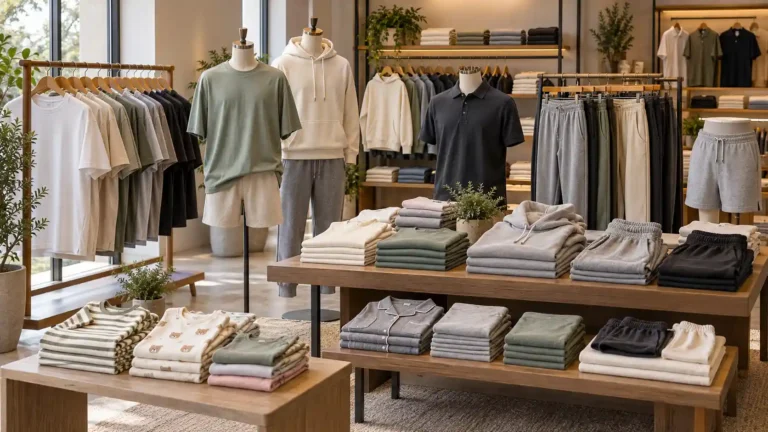
Our core product categories include T-shirts, polo shirts, hoodies, sweatshirts, joggers, knitted shorts, loungewear, sleepwear and children’s knitted apparel. We support different fabric compositions, garment silhouettes, weights, surface finishes and branding requirements according to each buyer’s technical specifications.
This product guide explains the construction, material choices, decoration methods and development considerations for the apparel categories we support.
Our Custom Knitwear Apparel Product Categories
Mirthuni Apparel focuses primarily on knitted casualwear and related clothing categories. Our sourcing and manufacturing support covers both established apparel programmes and new private-label collections requiring custom development.
| Product Category | Common Styles | Suitable Fabrics |
|---|---|---|
| T-shirts | Regular, oversized, boxy, drop-shoulder, raglan, long-sleeve | Single jersey, interlock, rib, slub |
| Polo shirts | Classic, premium, long-sleeve, textured | Piqué, honeycomb, jersey, jacquard |
| Hoodies | Pullover, zip-up, quarter-zip, oversized | French terry, brushed fleece |
| Sweatshirts | Crewneck, relaxed, oversized, rib-trimmed | French terry, fleece, interlock |
| Joggers and knit pants | Tapered, relaxed, straight-leg | French terry, fleece, interlock |
| Knitted shorts | Casual, lounge, drawstring, matching sets | Jersey, French terry, interlock |
| Loungewear | Relaxed tops, bottoms, coordinated sets | Jersey, rib, modal blends, French terry |
| Sleepwear | Pajama tops, pants, shorts, sleep sets | Cotton jersey, interlock, modal blends |
| Kidswear | T-shirts, sweatshirts, shorts, pajamas, sets | Cotton jersey, interlock, rib, fleece |
Custom T-Shirt Manufacturing
T-shirts are a core product category within our knitted apparel sourcing programmes. We coordinate manufacturing for regular-fit, relaxed, oversized, boxy, drop-shoulder, long-sleeve and raglan-sleeve designs.
Regular-Fit Cotton T-Shirts
Regular-fit T-shirts are commonly developed using cotton single jersey with suitable neckline rib, shoulder construction and coverstitched hems. Fabric selection depends on the required softness, opacity, durability and target garment weight.
Oversized and Drop-Shoulder T-Shirts
Oversized T-shirts use adjusted body widths, shoulder positions, sleeve proportions and lengths to create a relaxed silhouette. Heavier cotton jersey, compact yarn constructions and suitable rib recovery may be selected for premium streetwear programmes.
Boxy and Heavyweight T-Shirts
Boxy T-shirts generally feature a wider body with a comparatively shorter length, depending on the intended design. Heavyweight fabrics require appropriate seam construction, neckline stabilization and garment handling during sewing.
Long-Sleeve and Raglan T-Shirts
Long-sleeve designs require attention to sleeve length, cuff construction and garment proportions. Raglan styles use a different sleeve and shoulder pattern configuration from conventional set-in sleeve T-shirts.
T-Shirt Fabric Weight Guidance
Approximately 160–180 GSM: Suitable for selected lightweight everyday T-shirts.
Approximately 180–220 GSM: Commonly evaluated for regular and premium casual T-shirts.
Approximately 220–260 GSM: Frequently considered for structured oversized and streetwear T-shirts.
Approximately 260–300 GSM: Suitable for selected heavyweight and structured T-shirt programmes, subject to fabric construction and garment design.
These are illustrative development ranges, not fixed specifications. Fabric hand feel, opacity and drape depend on more than GSM alone.
Custom Polo Shirt Manufacturing
Mirthuni Apparel coordinates polo shirt development for casualwear, retail collections, corporate apparel and private-label programmes.
Polo shirts may use cotton piqué, honeycomb, jersey, interlock or suitable textured knit fabrics. Flat-knitted collars and cuffs, placket construction, button selection and embroidery placement are important technical considerations.
Classic Piqué Polo Shirts
Piqué fabrics provide a textured knit appearance commonly associated with traditional polo shirts. The fabric’s construction, yarn quality and finishing influence breathability, softness and dimensional stability.
Premium Cotton Polo Shirts
Premium polo programmes may specify combed or compact cotton yarns, selected washing finishes, controlled shrinkage, stable collars and refined stitching.
Long-Sleeve and Textured Polo Shirts
Long-sleeve polo shirts and textured styles may require specialized collar, cuff and fabric matching. Jacquard, honeycomb and other suitable knitted structures can be evaluated according to the buyer’s design.
Custom Hoodie Manufacturing
Hoodies are developed in pullover, full-zip, quarter-zip, oversized and other suitable casualwear silhouettes. Fabric selection often includes loopback French terry and brushed fleece constructions.
Pullover Hoodies
Pullover hoodies typically include hood construction, neckline joining, rib cuffs, waistband and optional kangaroo pockets. Hood shape, drawcord construction and pocket positioning must follow the approved tech pack.
Zip-Up Hoodies
Full-zip hoodies require accurate zipper alignment, suitable zipper quality, stable front panels and consistent stitching. Quarter-zip styles require additional attention to neckline and zipper-placket construction.
Heavyweight Oversized Hoodies
Heavyweight hoodie development may use substantial French terry or fleece-base fabrics with suitable rib components. Pattern proportions, seam bulk, fabric shrinkage and finishing must be assessed together.
Custom Sweatshirt Manufacturing
Sweatshirts are commonly developed as crewneck, relaxed-fit, oversized and rib-trimmed garments using French terry, brushed fleece or other suitable knitted fabrics.
Construction requirements may include rib neckbands, cuffs, bottom bands, reinforced shoulder seams and optional decorative stitching. Some designs incorporate a V-insert at the front neckline or other approved construction details.
Printing, embroidery, appliqué, chenille and selected specialty decoration techniques can be coordinated according to fabric compatibility and the intended garment appearance.
Joggers and Knitted Pants Manufacturing
Our knitted bottoms programmes include relaxed joggers, tapered joggers, straight-leg knit pants and coordinated lounge bottoms.
Common construction elements include elastic waistbands, drawcord channels, side pockets, rib ankle cuffs, open leg hems and reinforced seams.
Jogger Fit Development
Fit development considers waist, hip, rise, thigh, knee, inseam and leg opening measurements. A tapered jogger requires different pattern engineering from a relaxed straight-leg knit pant.
Waistband and Drawcord Construction
Waistband development should account for elastic width, recovery, casing construction, drawcord position and wearer comfort. Functional drawcords and other trims must meet the approved specification and applicable safety requirements.
Custom Knitted Shorts Manufacturing
Knitted shorts are suitable for casualwear, loungewear, sleepwear and coordinated garment sets. Fabric options include cotton jersey, interlock, French terry and suitable blends.
Design features may include elastic waistbands, adjustable drawcords, side pockets, patch pockets and different leg lengths.
Manufacturing controls focus on waistband performance, inseam construction, pocket attachment, fit proportions and garment dimensional stability.
Private-Label Loungewear Manufacturing
Mirthuni Apparel supports loungewear collections designed around comfort, relaxed silhouettes, soft fabric hand feel and coordinated garment styling.
Suitable product combinations include oversized T-shirts with knitted shorts, sweatshirts with joggers, ribbed lounge tops with relaxed pants and other matching knitwear sets.
Loungewear Fabric Options
- Cotton single jersey for lightweight tops
- Cotton-modal blends for selected soft-hand applications
- Rib fabrics for fitted and stretch-oriented lounge garments
- Interlock for suitable structured or smooth-surface styles
- French terry for relaxed sweat sets
- Suitable bamboo-viscose or lyocell blends subject to sourcing feasibility
Coordinated sets require consistent colour matching, compatible fabric shrinkage and approved measurements across the individual garments.
Sleepwear and Pajama Manufacturing
Sleepwear development focuses on wearer comfort, suitable fabric softness, seam construction, dimensional stability and appropriate fit.
Mirthuni Apparel supports knitted pajama tops, sleep pants, sleep shorts, long-sleeve sleepwear and coordinated pajama sets.
Cotton Jersey Pajama Sets
Cotton jersey is commonly evaluated for lightweight knitted sleepwear. Fabric selection should consider opacity, hand feel, breathability, shrinkage and laundering performance.
Modal and Cotton-Modal Sleepwear
Suitable modal and cotton-modal blends may be considered for sleepwear requiring a smooth hand feel and fluid drape. Fabric performance depends on the blend, yarn, knitting construction and finishing.
All-Over Printed Sleepwear
Rotary screen printing and digital textile printing can be coordinated for suitable all-over patterns, including floral, geometric and seasonal sleepwear designs.
Selected woven flannel pajama programmes may also be evaluated separately according to fabric availability and minimum quantities, although knitted apparel remains our principal specialization.
Children’s Knitwear Manufacturing
Mirthuni Apparel coordinates selected children’s knitted apparel programmes, including T-shirts, sweatshirts, knitted shorts, pajama sets and casualwear combinations.
Children’s garments require additional attention to size grading, garment fit, secure trims, appropriate construction and destination-market product-safety requirements.
Kidswear Fabric Selection
Suitable fabrics may include cotton single jersey, interlock, rib, French terry and fleece-base constructions. Fabric weight and finishing should be selected according to garment type, age group and intended use.
Printed Children’s Apparel
Screen printing, rotary all-over printing and digital textile printing may be coordinated for suitable children’s garments. Printing materials and decorative attachments require review against applicable chemical and physical safety requirements.
Children’s Product Compliance
Requirements concerning drawstrings, small parts, flammability, labeling and restricted substances vary by destination market and product category. Compliance must be evaluated against the relevant standards and supported by appropriate verification where required.
Children’s knitwear programmes generally require a starting minimum of 400 pieces per style per colour, subject to fabric and design requirements.
Fabric Selection by Apparel Product
| Garment | Common Fabric Structures | Main Selection Factors |
|---|---|---|
| Regular T-shirts | Single jersey, interlock | Softness, opacity, shrinkage |
| Oversized T-shirts | Heavy jersey, interlock | Structure, drape, neckline stability |
| Polos | Piqué, honeycomb, jacquard | Texture, shape retention, comfort |
| Hoodies | French terry, brushed fleece | Warmth, weight, seam bulk |
| Sweatshirts | French terry, fleece, interlock | Body, softness, rib compatibility |
| Joggers and shorts | French terry, interlock, jersey | Comfort, recovery, durability |
| Loungewear | Jersey, rib, modal blends | Soft hand, drape, stretch |
| Sleepwear | Jersey, interlock, modal blends | Comfort, care, dimensional stability |
| Kidswear | Jersey, interlock, rib, fleece | Comfort, safety, durability |
Natural, Cellulosic and Blended Yarn Options
Material selection can include conventional cotton, organic cotton, combed cotton, compact cotton, cotton-modal, modal, bamboo viscose, lyocell, selected hemp blends and cotton-elastane constructions, depending on the product and sourcing feasibility.
Organic cotton and other certified material claims require suitable chain-of-custody documentation and applicable certification verification. A partner’s certification does not automatically establish certification of every finished garment.
Explore our Fibres, Yarns and Material Compositions resource for further technical information.
Custom Printing and Embroidery for Apparel Products
Private-label garments may be customized with screen printing, puff printing, high-density printing, digital printing, DTF transfers, all-over printing, computerized embroidery and selected decorative handwork.
Decoration methods are selected according to garment type, fabric compatibility, artwork dimensions, colour count, quantity and required durability.
For example, premium oversized T-shirts may use puff or high-density screen prints, polo shirts commonly use small embroidered logos, and children’s pajama sets may use rotary or digital all-over fabric printing.
Read our Apparel Printing and Embroidery guide for details.
Private Label Clothing Development and Customization
Mirthuni Apparel coordinates private-label development from buyer specifications, reference garments and approved tech packs.
Custom Product Development Options
- Custom garment patterns and size grading
- Fabric composition and GSM selection
- Custom garment colours and suitable dyeing finishes
- Printing and embroidery placement development
- Woven labels and printed neck labels
- Size labels and wash-care labels
- Hangtags, barcodes and selected branded trims
- Approved individual and bulk packaging
Branding materials, trims and packaging must be assessed for minimum quantities, production compatibility and destination-market requirements.
Apparel Product Development and Sampling
Development begins with reviewing the garment design, fabric specifications, measurements, construction requirements and intended order quantity.
Pattern development and sampling allow buyers to assess garment fit, fabric performance, workmanship and branding before approving bulk production.
Sampling is paid. Under our standard commercial arrangement, 50% of the agreed sampling charges are adjusted against a confirmed bulk order, subject to the approved quotation terms.
Minimum Order Quantities by Apparel Category
| Product Programme | Starting MOQ Guidance | Important Conditions |
|---|---|---|
| Standard knitted apparel | Generally 300 pieces per colour per style | Subject to fabric, trims and production feasibility |
| Children’s knitwear | Generally 400 pieces per style per colour | Safety, grading and material requirements apply |
| Custom yarn-dyed fabrics | Fabric-dependent; higher minimums may apply | Yarn dyeing and knitting development requirements |
| Specialty or custom-developed materials | Quoted individually | Yarn availability, knitting and dyeing minimums |
Trial orders and special commercial arrangements may be considered individually. Minimum order quantities should not be interpreted as guaranteed availability for every garment, fabric or design.
Quality Control Across Apparel Product Categories
Quality requirements differ between garments. T-shirts require neckline stability and dimensional consistency; polo shirts require collar and placket accuracy; hoodies require suitable seam construction and trim alignment; sleepwear emphasizes comfort and laundering performance; and children’s clothing requires additional safety review.
Common Product Quality Checks
- Fabric composition, construction and GSM
- Garment measurements and size grading
- Fabric shade and surface appearance
- Stitch quality and seam construction
- Dimensional stability after washing
- Printing and embroidery appearance
- Labeling and trim accuracy
- Applicable restricted-substance and product-safety requirements
- Final presentation and packing accuracy
Relevant laboratory testing can be coordinated where required, with the test standard, sample scope and acceptance criteria agreed before testing.
International Apparel Manufacturing and Export Support
Mirthuni Apparel supports international buyers seeking custom knitted apparel manufacturing and sourcing from Tiruppur, India.
Our support includes technical communication, production-partner coordination, sampling, material sourcing, agreed quality checkpoints, private-label requirements and export packing.
Shipment arrangements may include FOB, CIF and DDP where commercially and operationally feasible, subject to the destination and confirmed quotation.
Manufacturing is executed through selected production partners. Mirthuni Apparel does not represent all partner factories as company-owned facilities.
Explore Our Apparel Manufacturing Process
Each finished apparel product depends on a coordinated sequence of material selection, knitting, fabric processing, decoration and garment assembly.
- Fibres, Yarns and Material Compositions
- Knitting and Fabric Processing
- Fabric Dyeing, Washing and Finishing
- Apparel Printing and Embroidery
- Garment Manufacturing and Sourcing Support
Request a Custom Apparel Manufacturing Quotation
To evaluate your project, please share your product category, garment reference images or tech pack, fabric composition, target GSM, size chart, colourways, quantities per colour and style, artwork, labeling requirements, packaging specifications and delivery destination.
These details help us assess suitable manufacturing partners, fabric availability, development requirements and commercial feasibility.
Contact Mirthuni Apparel to discuss custom apparel manufacturing and sourcing support for your collection.
Frequently Asked Questions About Custom Apparel Manufacturing
1. What apparel products does Mirthuni Apparel manufacture and source?
Mirthuni Apparel coordinates manufacturing and sourcing for regular and oversized T-shirts, polo shirts, hoodies, sweatshirts, joggers, knitted shorts, loungewear, sleepwear and children’s knitted apparel through selected production partners in Tiruppur, India.
2. Can Mirthuni Apparel manufacture custom oversized and heavyweight T-shirts?
Yes. Mirthuni Apparel supports custom oversized, boxy and drop-shoulder T-shirt development using suitable knitted fabrics. Fabric weight, neckline construction, fit proportions, finishing and branding are evaluated against the buyer’s specifications.
3. What fabrics are available for private-label knitwear manufacturing?
Fabric options may include cotton single jersey, interlock, rib, piqué, honeycomb, French terry, brushed fleece, jacquard and selected cotton-modal, lyocell, bamboo-viscose or elastane blends. Availability depends on fabric construction, material sourcing and production requirements.
4. Does Mirthuni Apparel manufacture custom polo shirts and hoodies?
Yes. Mirthuni Apparel supports polo shirt development with suitable knitted collars, plackets and branding, as well as pullover, zip-up and quarter-zip hoodies using appropriate French terry, fleece or other compatible knitted fabrics.
5. Can Mirthuni Apparel produce matching loungewear and sleepwear sets?
Yes. Mirthuni Apparel coordinates matching loungewear and knitted sleepwear sets, including T-shirts, sweatshirts, joggers, pajama tops, pants and shorts. Fabric matching, sizing, colour consistency and garment comfort are considered during development.
6. Does Mirthuni Apparel support children’s clothing manufacturing?
Yes. Selected children’s knitted apparel programmes include T-shirts, sweatshirts, shorts, pajamas and coordinated sets. Development must address age-specific sizing, secure construction and applicable product-safety and labeling requirements for the destination market.
7. What printing and embroidery options are available for custom garments?
Depending on the garment and artwork, Mirthuni Apparel can coordinate screen printing, puff and high-density effects, DTG, DTF, rotary and digital all-over printing, computerized embroidery and selected decorative embroidery techniques through suitable partners.
8. What is the minimum order quantity for custom apparel products?
The standard starting minimum order quantity is generally 300 pieces per colour per style for suitable knitted apparel. Children’s knitwear generally starts at 400 pieces per style per colour. Specialty fabrics and custom developments may require different minimums.
9. Does Mirthuni Apparel provide sampling and private labeling?
Yes. Mirthuni Apparel coordinates paid garment sampling and private-label options including brand labels, care labels, size labels, hangtags and suitable custom packaging. Under standard terms, 50% of agreed sample charges are adjusted against a confirmed bulk order.
10. What information is needed for a custom apparel manufacturing quotation?
Buyers should provide the garment category, tech pack or reference images, fabric composition, GSM, measurements, size range, colours, quantities per colour and style, artwork, branding, packaging and delivery requirements. Additional testing or compliance specifications should also be identified.