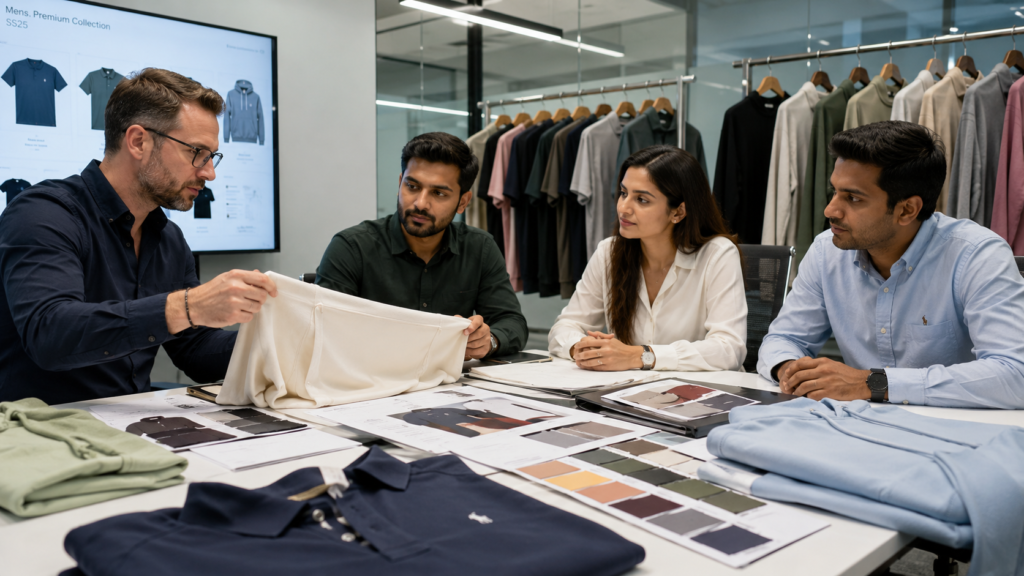
Apparel sourcing for German fashion brands has become increasingly important as buyers seek reliable manufacturing partners, stronger supply chain visibility, and long-term production support in India.
Germany remains one of Europe’s most important apparel markets, with fashion retailers, private label companies, online brands, and importers constantly seeking reliable production partners capable of delivering consistent quality and dependable execution. As sourcing requirements become more demanding, German fashion brands increasingly look beyond simple manufacturing and focus on suppliers who can support product development, quality control, production coordination, and export execution.
At Mirthuni Apparel, we support German fashion companies, apparel importers, sourcing managers, and private label brands by helping manage apparel production programs in India. From initial sampling and fabric sourcing to quality monitoring and shipment coordination, our objective is to help buyers reduce sourcing complexity while maintaining visibility throughout the production process.
Whether you are developing T-shirts, polo shirts, hoodies, sweatshirts, kidswear, sleepwear, loungewear, or other knitted apparel categories, having the right sourcing and manufacturing support structure can play a significant role in achieving consistent production outcomes.
Why German Fashion Brands Continue to Source Apparel from India
German fashion brands operate in one of Europe’s most competitive retail environments. Whether serving department stores, specialty retailers, e-commerce platforms, or private label programs, buyers are under constant pressure to balance product quality, delivery schedules, and commercial viability. As a result, sourcing decisions are increasingly based on execution capability rather than simply identifying a factory that can manufacture garments.
India continues to attract the attention of German apparel buyers because of its established textile ecosystem, extensive fabric availability, skilled workforce, and experience supporting international fashion programs. For knitted apparel categories in particular, buyers can access a wide range of product development and manufacturing capabilities within a single sourcing region.
For German fashion companies, sourcing from India often provides advantages such as:
Access to Diverse Apparel Categories
Many German brands manage multiple product categories throughout the year. Rather than working with separate suppliers for each product type, buyers often prefer sourcing partners capable of supporting a broader apparel portfolio.
Common categories include:
- T-Shirts
- Polo Shirts
- Sweatshirts
- Hoodies
- Joggers
- Sleepwear
- Loungewear
- Kidswear
- Fashion Basics
- Private Label Collections
This flexibility can simplify supplier management and production planning.
Product Development Capabilities
Modern apparel sourcing extends far beyond order placement. German buyers frequently require support during the development phase, including:
- Tech pack evaluation
- Fabric recommendations
- Sample development
- Fit adjustments
- Print and embroidery execution
- Packaging development
Strong product development capabilities help reduce delays and improve production readiness before bulk manufacturing begins.
Established Export Experience
International apparel programs require coordination across multiple stages, including sourcing, production, inspection, packing, documentation, and shipment planning. German importers often seek partners familiar with export procedures and international quality expectations to help maintain smooth execution throughout the order cycle.
Flexibility for Private Label Programs
Many German retailers and fashion brands operate under private label business models. These programs often require customized garment specifications, brand labels, packaging, hangtags, and presentation standards.
A sourcing and manufacturing support partner should be capable of coordinating these requirements while maintaining consistency across production runs.
Focus on Long-Term Supplier Relationships
German buyers are generally focused on stability, transparency, and predictable execution rather than short-term sourcing decisions. Long-term partnerships often lead to better communication, improved production planning, and more efficient product development cycles over time.
For this reason, supplier evaluation frequently extends beyond pricing and includes factors such as responsiveness, quality management, production visibility, and export readiness.
German apparel importers, sourcing managers, and private label companies typically require more than manufacturing capacity alone. Successful sourcing programs depend on clear communication, structured processes, quality monitoring, and reliable execution from development through shipment.
When evaluating sourcing partners in India, German buyers often look for support in the following areas:
- Product development and sampling
- Fabric sourcing and material approvals
- Production planning
- Quality control monitoring
- Packaging coordination
- Export documentation support
- Shipment readiness management
A well-organized sourcing process helps buyers maintain visibility across every stage of production while reducing operational risks that can impact delivery schedules or product consistency.
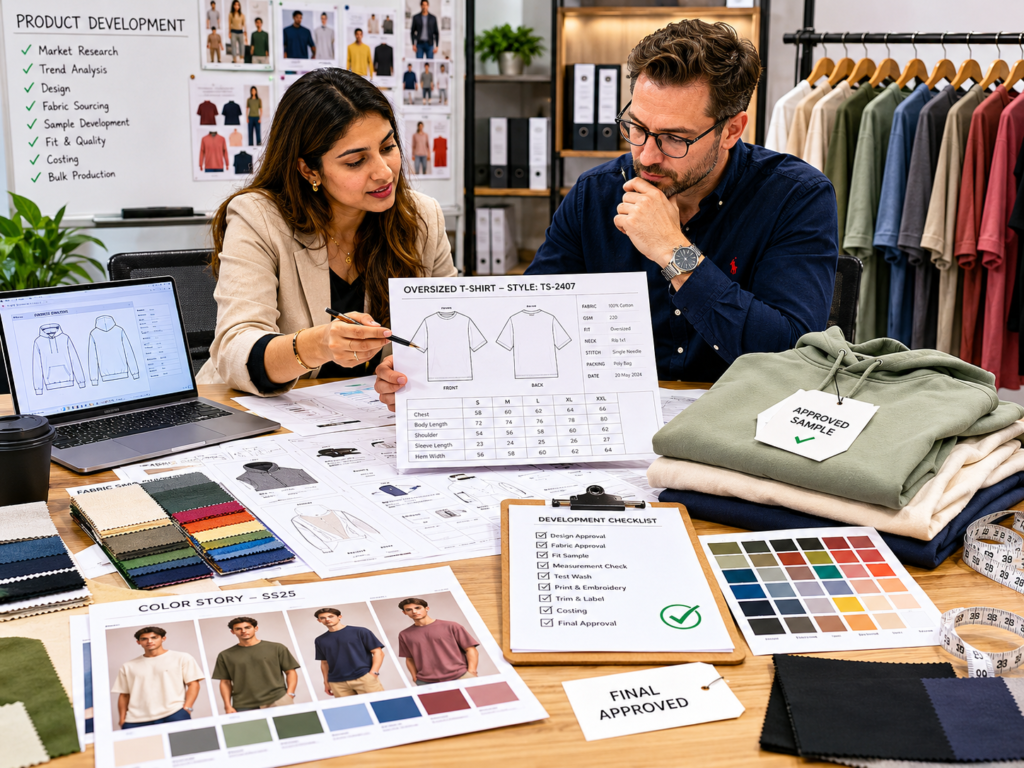
For German fashion brands, sourcing success is often determined by execution quality rather than factory selection alone. While manufacturing capability remains important, buyers also require visibility, communication, quality assurance, and production coordination throughout the order lifecycle.
Mirthuni Apparel operates as an apparel sourcing and manufacturing support partner, helping German fashion companies manage production programs in India through structured coordination and supplier management. Our role is to simplify the sourcing process while providing buyers with greater confidence and control during development and production.
Tech Pack Review and Feasibility Assessment
Every successful production program begins with a thorough review of product requirements.
Our team works with buyers to evaluate:
- Technical specifications
- Fabric requirements
- Construction details
- Print and embroidery applications
- Packaging requirements
- Label and branding requirements
- Production feasibility
This early-stage evaluation helps identify potential challenges before sampling begins and reduces the likelihood of costly revisions later in the process.
Fabric and Trim Sourcing Support
Fabric selection plays a significant role in garment quality, appearance, and performance.
Depending on the product category, we support sourcing and development of:
- Cotton Jersey
- Organic Cotton Fabrics
- French Terry
- Fleece
- Rib Fabrics
- Interlock Fabrics
- Bamboo Blends
- Sustainable Fabric Options
- Custom Dye Programs
In addition to fabrics, we coordinate trims such as:
- Woven Labels
- Printed Labels
- Hangtags
- Packaging Components
- Drawcords
- Zippers
- Buttons
- Branding Accessories
This allows German buyers to consolidate development activities through a structured sourcing process.
Sample Development and Approval Management
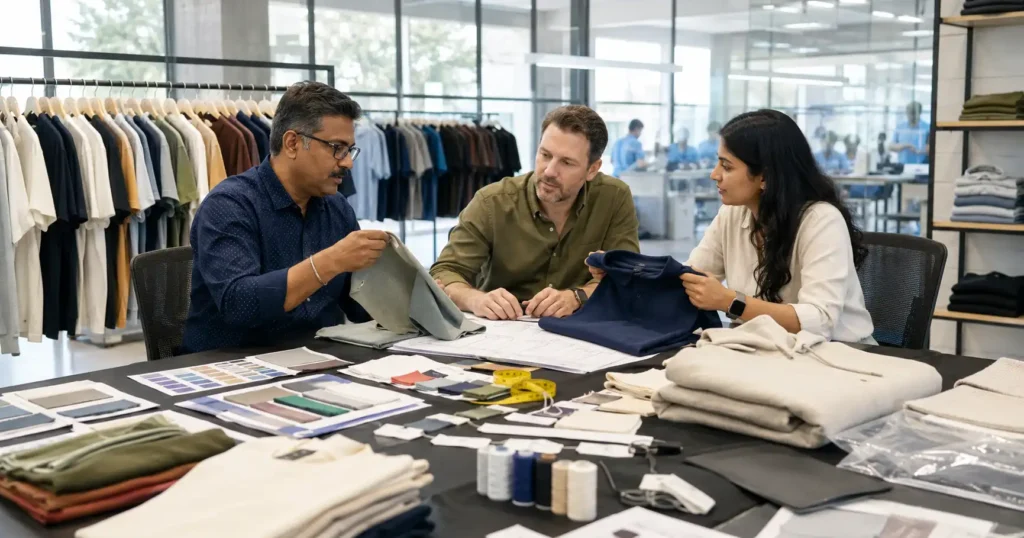
Before bulk production begins, buyers typically require multiple development stages to validate the product.
These stages may include:
- Development Samples
- Fit Samples
- Size Set Samples
- Pre-Production Samples
- Salesman Samples
Our objective is to ensure that product requirements are reviewed and approved before production commitments are made.
Proper sample management often contributes significantly to production consistency and quality outcomes.
Production Coordination and Monitoring
Once production is approved, maintaining visibility becomes essential.
Our team coordinates:
- Fabric procurement tracking
- Production scheduling
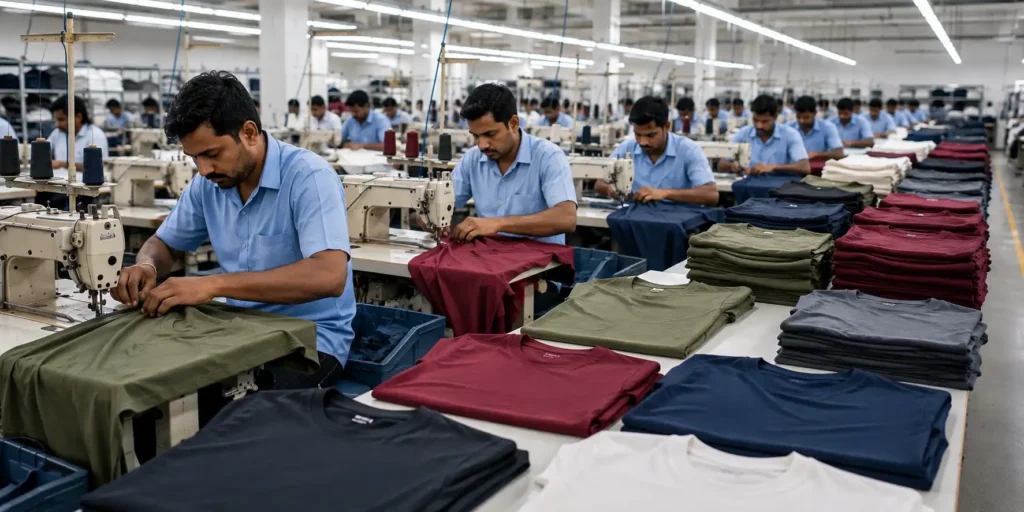
- Manufacturing progress monitoring
- Quality checkpoints
- Production updates
- Shipment readiness planning
This structured approach helps buyers stay informed throughout the production cycle without requiring direct daily management of factory operations.
Quality Control and Inspection Support
Quality assurance remains a priority for most German buyers.
To support production consistency, quality checks may be conducted during key stages of manufacturing, including:
Pre-Production Review
Verification of:
- Approved specifications
- Fabric approvals
- Trims and accessories
- Measurement standards
Inline Production Monitoring
Evaluation of:
- Stitch quality
- Garment construction
- Print quality
- Embroidery execution
- Measurement consistency
Final Inspection
Verification of:
- Packing accuracy
- Product appearance
- Measurement compliance
- Carton information
- Quantity verification
These checkpoints help identify issues early and reduce the risk of shipment-related surprises.
Export Execution and Shipment Readiness
Production completion is only one part of a successful sourcing program.
German importers also require support with:
- Packing coordination
- Carton planning
- Shipment scheduling
- Export documentation
- Commercial documentation review
- Dispatch readiness
Our objective is to help ensure that production programs move efficiently from manufacturing through shipment preparation.
Supporting Long-Term Apparel Programs
Many German brands prefer to build long-term sourcing relationships that support future growth and product expansion.
As collections evolve, sourcing requirements often become more complex, involving:
- Multiple product categories
- Seasonal launches
- New fabric developments
- Private label expansion
- Volume growth
By maintaining structured sourcing and manufacturing support processes, buyers can develop more stable and scalable production programs over time.
German fashion brands often manage diverse product portfolios that serve multiple customer segments, retail channels, and seasonal collections. As a result, sourcing programs frequently require flexibility across product categories, fabrics, and manufacturing techniques.
At Mirthuni Apparel, we support a wide range of knitted apparel categories commonly sourced by German fashion companies, private label brands, apparel importers, and buying offices.
T-Shirts and Fashion Basics
T-shirts remain one of the most widely sourced apparel categories for German retailers and fashion brands.
We support development and production of:
- Crew Neck T-Shirts
- Oversized T-Shirts
- Fashion Fit T-Shirts
- Relaxed Fit T-Shirts
- Heavyweight T-Shirts
- Lightweight Summer T-Shirts
- Printed T-Shirts
- Embroidered T-Shirts
- Private Label Basics
Depending on brand requirements, garments can be developed using various fabric constructions and finishing techniques.
Polo Shirts
Polo shirts continue to be an important category across retail, corporate, lifestyle, and uniform programs.
Supported options include:
- Cotton Pique Polos
- Jersey Polos
- Tipped Collar Polos
- Long Sleeve Polos
- Fashion Polos
- Private Label Polo Programs
Customization options may include branded trims, labels, packaging, and embroidery applications.
Hoodies and Sweatshirts
German brands frequently include hoodies and sweatshirts within their autumn and winter collections.
Supported categories include:
- Pullover Hoodies
- Zip Hoodies
- Oversized Hoodies
- Fashion Sweatshirts
- Crew Neck Sweatshirts
- Fleece Garments
- French Terry Programs
Additional embellishment options may include:
- Screen Printing
- Embroidery
- Puff Prints
- Appliqué Work
- Specialty Washes
Sleepwear and Loungewear
Sleepwear and loungewear continue to experience strong demand across European markets, including Germany.
We support:
- Pajama Sets
- Lounge Sets
- Sleep T-Shirts
- Sleep Shorts
- Lounge Pants
- Family Matching Sets
- Kids Sleepwear Programs
These categories often require careful attention to fabric comfort, sizing consistency, and production quality.
Kidswear Programs
German children’s apparel brands often require reliable execution across multiple age groups and seasonal collections.
Supported categories include:
- Kids T-Shirts
- Polo Shirts
- Sweatshirts
- Hoodies
- Shorts
- Joggers
- Sleepwear
- Fashion Coordinates
We understand that children’s apparel programs frequently involve additional considerations relating to labeling, sizing, comfort, and product consistency.
Private Label Apparel Programs
Many German buyers operate private label business models that require complete brand customization.
Private label support may include:
- Custom Neck Labels
- Woven Labels
- Printed Labels
- Hangtags
- Packaging Development
- Custom Cartons
- Brand-Specific Presentation Standards
This allows buyers to develop products that align with their brand identity while maintaining consistency across product ranges.
Seasonal Collection Support
Fashion brands often launch multiple collections throughout the year.
We assist buyers with:
- Spring/Summer Collections
- Autumn/Winter Collections
- Capsule Collections
- Limited Edition Programs
- Product Expansion Projects
A structured sourcing process helps ensure that seasonal timelines remain aligned with development and production schedules.
Flexible Support for Growing Fashion Brands
Not all German buyers have the same sourcing requirements.
Our support extends to:
- Emerging Fashion Brands
- Established Apparel Companies
- Online Fashion Retailers
- Private Label Programs
- Buying Offices
- Apparel Importers
- Multi-Brand Retailers
By supporting multiple product categories under one sourcing framework, buyers can simplify production management and improve coordination across their apparel programs.
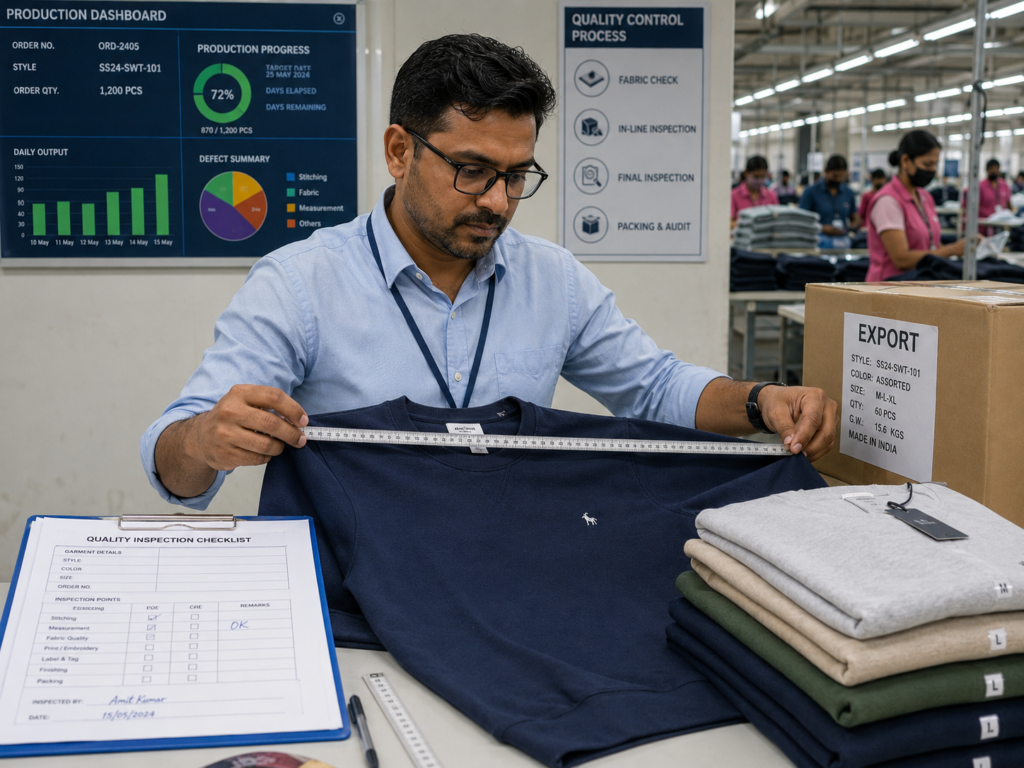
Sampling, Tech Pack Review, and Product Development
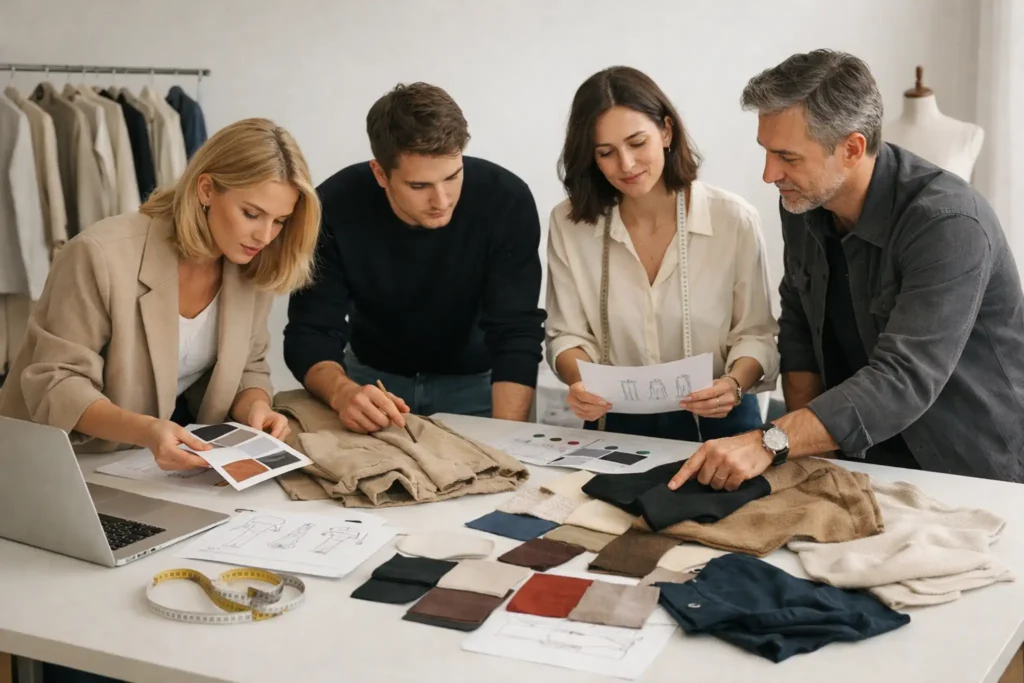
For German fashion brands, successful production begins long before bulk manufacturing starts. Product development serves as the foundation of every apparel program, helping buyers validate specifications, assess garment construction, approve materials, and identify potential production challenges before significant resources are committed.
A structured development process not only improves product consistency but also reduces the likelihood of delays, quality concerns, and costly revisions during production.
At Mirthuni Apparel, we work closely with German apparel importers, private label brands, sourcing managers, and fashion companies to support product development from concept to production readiness.
Tech Pack Evaluation and Feasibility Review
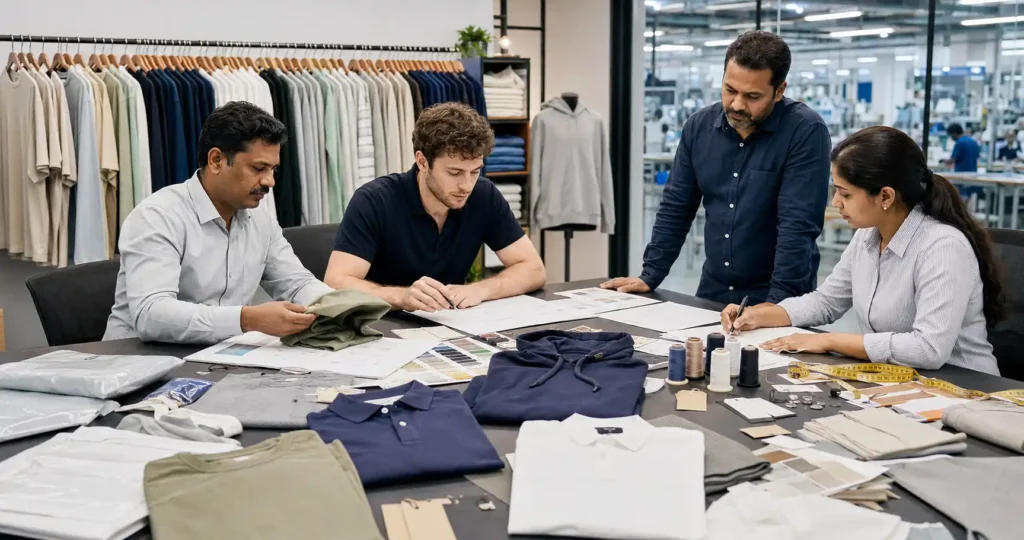
Most development projects begin with a detailed review of buyer specifications.
Our team evaluates:
- Technical drawings
- Measurement charts
- Construction requirements
- Fabric specifications
- Trim requirements
- Branding applications
- Packaging requirements
- Print and embroidery placements
This review helps determine production feasibility and ensures that all requirements are clearly understood before sample development begins.
For buyers who are still refining product specifications, early technical discussions can help identify practical manufacturing solutions and development considerations.
Fabric and Material Development
Fabric selection directly impacts garment quality, appearance, comfort, and performance.
Depending on the product category, development may involve:
- Fabric sourcing
- Fabric matching
- Custom color development
- Fabric testing coordination
- Material approval processes
- Trim sourcing and approvals
German brands often require consistency across multiple production runs, making early material approvals particularly important.
By confirming materials before production planning begins, buyers can reduce the risk of unexpected changes later in the process.
Development Sample Creation
Development samples allow buyers to evaluate the overall product concept before moving into fit and production approvals.
During this stage, buyers typically review:
- Garment construction
- Fabric appearance
- Branding placement
- Stitching quality
- Overall design execution
Feedback received during the development stage often forms the basis for subsequent refinements.
Fit Sample Review
Fit remains one of the most important aspects of garment development.
German fashion brands frequently place significant emphasis on:
- Garment proportions
- Measurement consistency
- Wearability
- Silhouette accuracy
- Size grading
Fit samples allow buyers to review these elements and provide adjustments before production approval.
Multiple fit revisions may be conducted depending on the complexity of the product and the brand’s requirements.
Size Set Evaluation
For products requiring multiple sizes, size set samples help verify grading consistency across the size range.
This stage helps ensure:
- Measurements remain accurate
- Fit standards are maintained
- Size progression is consistent
- Production specifications are properly understood
Size set approvals can significantly reduce measurement-related issues during bulk manufacturing.
Pre-Production Sample Approval
Before bulk production begins, German buyers often require a final pre-production sample.
This sample serves as the approved production reference and may include:
- Approved fabrics
- Approved trims
- Approved branding
- Final measurements
- Approved packaging components
The pre-production sample provides a clear benchmark that can be referenced throughout manufacturing and quality inspections.
Development Support for Private Label Programs
Many German brands operate private label collections that require customized product development.
Private label support may include:
- Custom neck labels
- Woven branding labels
- Printed care labels
- Hangtags
- Packaging development
- Brand presentation requirements
A structured development process helps ensure that these elements are properly integrated before production begins.
Reducing Risk Before Production
One of the primary goals of product development is risk reduction.
By investing time in:
- Technical review
- Material approvals
- Sample development
- Fit validation
- Pre-production approvals
buyers can improve production readiness and reduce the likelihood of costly corrections during manufacturing.
For German fashion companies managing seasonal collections, retail launch schedules, and private label programs, a disciplined development process often plays a critical role in achieving reliable production outcomes.
Once samples have been approved and production is authorized, maintaining visibility throughout manufacturing becomes a critical priority for German fashion brands. Successful apparel sourcing depends not only on product development but also on consistent execution during bulk production.
Many sourcing challenges occur after production begins, when buyers have limited visibility into manufacturing progress, quality performance, material utilization, and shipment readiness. A structured production coordination process helps reduce these risks while ensuring that approved specifications are maintained throughout the production cycle.
At Mirthuni Apparel, we help German apparel importers, private label brands, and fashion companies coordinate production activities through organized monitoring, communication, and quality management processes.
Production Planning and Scheduling
Before manufacturing begins, production schedules are established based on:
- Approved samples
- Fabric availability
- Trim readiness
- Production capacity
- Delivery requirements
- Shipment timelines
Proper production planning helps minimize bottlenecks and supports smoother execution throughout the manufacturing process.
Manufacturing Progress Monitoring
Visibility during production allows buyers to stay informed and make decisions quickly when necessary.
Production monitoring may include:
- Fabric arrival status
- Cutting progress
- Sewing progress
- Printing and embroidery status
- Finishing progress
- Packing readiness
- Shipment preparation updates
Regular updates help German buyers maintain confidence that production remains aligned with approved schedules.
Inline Quality Monitoring
Quality control is most effective when issues are identified during production rather than after completion.
Inline inspections help verify:
- Garment construction
- Stitch quality
- Measurement consistency
- Print placement
- Embroidery quality
- Fabric appearance
- Workmanship standards
Early identification of issues allows corrective actions to be implemented before larger quantities are affected.
Final Quality Inspection
Before garments are packed and prepared for shipment, final inspections help confirm compliance with approved requirements.
Inspection activities may include:
- Measurement verification
- Visual quality review
- Label verification
- Packaging inspection
- Quantity confirmation
- Carton marking review
These inspections provide an additional level of assurance before goods are dispatched.
Packaging and Shipment Readiness
Proper packing and shipment preparation are important components of the sourcing process, particularly for international buyers managing retail launches and seasonal collections.
Our team coordinates support for:
- Folding requirements
- Polybag requirements
- Hangtag application
- Carton specifications
- Barcode requirements
- Shipping marks
- Packing list verification
Attention to these details helps ensure that products arrive ready for distribution and retail operations.
Supporting Consistent Production Outcomes
For German fashion companies, long-term sourcing success often depends on consistency rather than individual production runs. By combining production coordination, progress monitoring, quality control, and export preparation, buyers can achieve greater visibility throughout the manufacturing process and reduce the operational risks commonly associated with apparel sourcing.
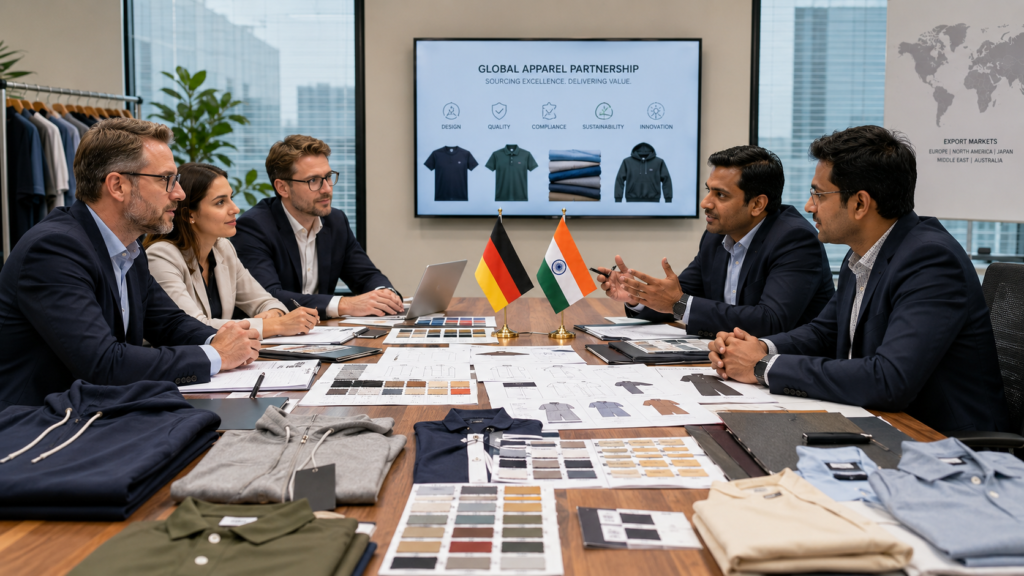
Every apparel business operates differently. Some German companies manage established retail programs with recurring seasonal collections, while others focus on private label development, e-commerce growth, or niche product categories. As sourcing requirements evolve, buyers often require a sourcing partner capable of adapting to different business models, production volumes, and product development needs.
At Mirthuni Apparel, we support a wide range of German apparel businesses seeking sourcing, production coordination, quality control, and manufacturing support from India.
German Fashion Brands
Fashion brands launching seasonal collections require reliable support throughout product development and production.
We assist brands that require:
- Collection development support
- Sampling coordination
- Production planning
- Quality monitoring
- Export-ready execution
- Long-term sourcing partnerships
Whether developing basic essentials or fashion-focused collections, structured sourcing processes help support consistent product outcomes.
German Apparel Importers
Importers often require dependable production partners capable of maintaining quality standards while supporting shipment schedules and inventory planning.
Our support includes:
- Supplier coordination
- Production monitoring
- Quality control support
- Packing verification
- Export documentation coordination
- Shipment readiness management
This helps importers maintain visibility throughout the sourcing process while reducing operational complexity.
Private Label Clothing Companies
Private label programs often require extensive customization and brand-specific development.
Support may include:
- Custom labels
- Branded packaging
- Hangtags
- Custom garment specifications
- Private label product development
- Seasonal collection execution
Our objective is to help buyers transform approved concepts into production-ready products while maintaining consistency across future orders.
E-Commerce and Direct-to-Consumer Brands
Many German apparel businesses operate online-first business models and require flexibility during product development and launch planning.
These brands often seek support for:
- New product introductions
- Small collection launches
- Product expansion programs
- Private label development
- Repeat production management
A structured sourcing process can help support growth while maintaining product consistency.
Buying Offices and Sourcing Managers
Buying offices and sourcing professionals often manage multiple suppliers, product categories, and production schedules simultaneously.
Our role is to support these teams through:
- Factory coordination
- Production visibility
- Quality monitoring
- Shipment readiness support
- Communication management
This allows sourcing teams to maintain better control over production activities while reducing administrative workload.
Long-Term Apparel Sourcing Partnerships
Many German buyers are not simply searching for a factory. They are looking for a sourcing and manufacturing support partner capable of supporting product development, production execution, and future growth.
By combining sourcing expertise, production coordination, quality control, and export support, we help buyers establish sourcing programs that can scale alongside their business requirements.
Frequently Asked Questions About Apparel Sourcing for German Fashion Brands
India offers access to a well-established textile and garment manufacturing ecosystem, a wide range of fabric options, skilled production capabilities, and experience supporting international apparel programs. Many German fashion brands source from India to develop private label collections, fashion basics, knitwear, sleepwear, kidswear, and seasonal apparel ranges.
We support a wide range of knitted apparel categories including T-shirts, polo shirts, hoodies, sweatshirts, joggers, sleepwear, loungewear, kidswear, and private label fashion collections. Product development and production support can be tailored to specific brand requirements.
Yes. We work with buyer-provided tech packs, measurement charts, reference samples, and design specifications. Our team reviews product feasibility, fabric requirements, construction details, trims, branding elements, and packaging requirements before sample development begins.
Yes. We support private label programs that require custom neck labels, woven labels, printed care labels, hangtags, branded packaging, and buyer-specific garment specifications. Private label requirements can be integrated throughout the development and production process.
Quality monitoring may include pre-production reviews, inline inspections, measurement verification, workmanship checks, and final inspections before shipment preparation. The objective is to maintain consistency with approved specifications throughout the production cycle.
Yes. Some buyers require sourcing support, production coordination, quality monitoring, supplier management, or shipment readiness assistance while continuing to work with their existing manufacturing partners. We can support specific stages of the sourcing process depending on project requirements.
To evaluate a project efficiently, buyers should ideally provide product details, tech packs, measurement charts, reference images, fabric requirements, estimated quantities, branding requirements, and target delivery schedules. This helps us assess feasibility and development requirements.
Yes. We support buyers managing Spring/Summer collections, Autumn/Winter collections, capsule programs, product expansion projects, and recurring private label collections. Structured sourcing and manufacturing support processes help maintain consistency across multiple production cycles.
Yes. Depending on project requirements, buyers may request development samples, fit samples, size set samples, and pre-production samples before approving bulk production. Sampling helps validate product specifications and reduce production risks.
Mirthuni Apparel helps German fashion brands, apparel importers, and private label companies manage sourcing, product development, production coordination, quality monitoring, and export-ready execution through a structured and transparent approach. Our goal is to help buyers reduce sourcing complexity while maintaining visibility throughout the production process.
Germany remains one of Europe’s most influential apparel markets, and sourcing strategies continue to evolve as brands seek greater flexibility, supply chain resilience, and long-term production partnerships. For German fashion companies, private label brands, apparel importers, and sourcing managers, India has become an increasingly important sourcing destination for knitted apparel, product development, and scalable manufacturing support.
An additional development that many European buyers are closely monitoring is the recently concluded India–European Union Free Trade Agreement negotiations, which are expected to further strengthen trade relations between India and European markets once fully implemented. While specific product categories and tariff provisions will vary, the broader objective is to facilitate trade and improve commercial opportunities between India and EU member states.
For German fashion brands evaluating future sourcing strategies, this creates an opportunity to establish sourcing relationships, development programs, and production networks in India ahead of wider market adoption.
At Mirthuni Apparel, we help German buyers navigate apparel sourcing through structured support covering:
- Product development and tech pack review
- Fabric and trim sourcing
- Sample development
- Production coordination
- Quality control monitoring
- Private label development
- Export-ready execution
- Long-term sourcing support
Whether you are launching a new collection, expanding a private label program, or evaluating alternative sourcing options for the German market, our team can review your requirements and provide initial feasibility feedback.
To Begin the Discussion, Please Share:
- Product specifications or tech packs
- Reference images or samples
- Fabric requirements
- Estimated quantities
- Branding requirements
- Target delivery timelines
Looking for an apparel sourcing and manufacturing support partner in India?
Contact Mirthuni Apparel today to discuss your sourcing requirements and explore how our team can support your next production program for the German market.