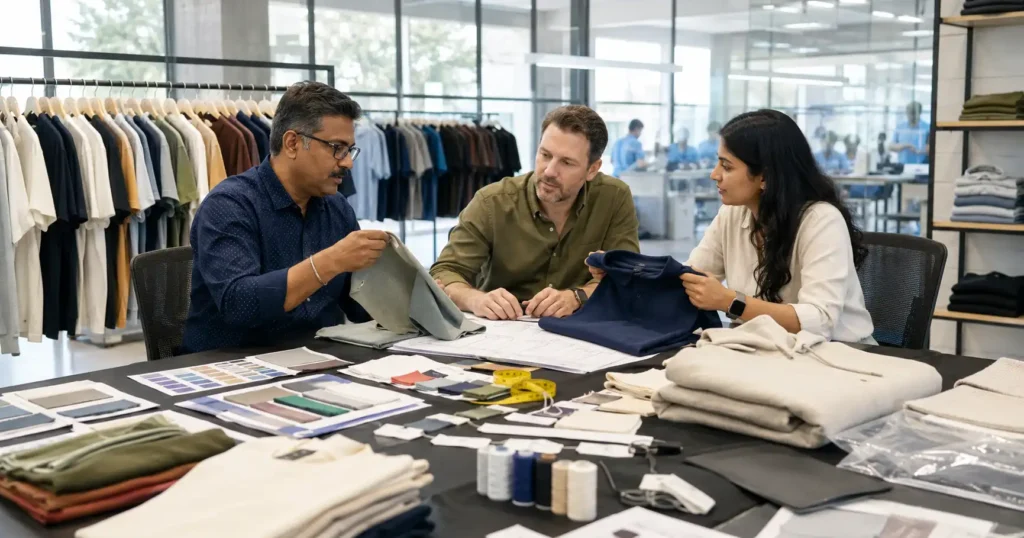
India is an established apparel sourcing market for international clothing brands looking for access to diverse fabrics, garment manufacturing capabilities, product-development resources and export support. For brands developing their own collections, however, finding a factory is only one part of the process.
Successful private label apparel manufacturing in India requires coordination across fabric sourcing, product development, sampling, garment construction, branding, quality control, packaging and shipment.
The right manufacturing arrangement therefore depends not only on price or production capacity, but also on whether the supplier or sourcing partner can translate the buyer’s product requirements into a controlled and repeatable production program.
This guide explains how the private-label apparel manufacturing process works and what international buyers should evaluate before starting production in India.
What Is Private Label Apparel Manufacturing?
Private-label apparel manufacturing is the production of garments according to the requirements of another brand or business. The finished products are sold under the buyer’s own brand rather than the manufacturer’s identity.
Depending on the project, the buyer may provide a complete tech pack or begin with a reference garment, sketch, measurement chart or product concept.
A private-label program can involve:
- fabric development and sourcing
- garment pattern and fit development
- sample preparation
- printing or embroidery
- woven and printed labels
- wash-care labels
- hangtags
- customized trims
- packaging
- quality inspection
- export preparation
The amount of development required varies considerably between a basic blank T-shirt program and a fully customized fashion collection.
Define the Product Before Approaching a Manufacturer
One of the most important steps happens before production begins.
International buyers should define the product as clearly as possible before requesting quotations or samples.
Useful information includes the garment type, fabric composition, GSM, colour, fit, size range, expected order quantity, printing or embroidery, labels, trims, packaging and destination market.
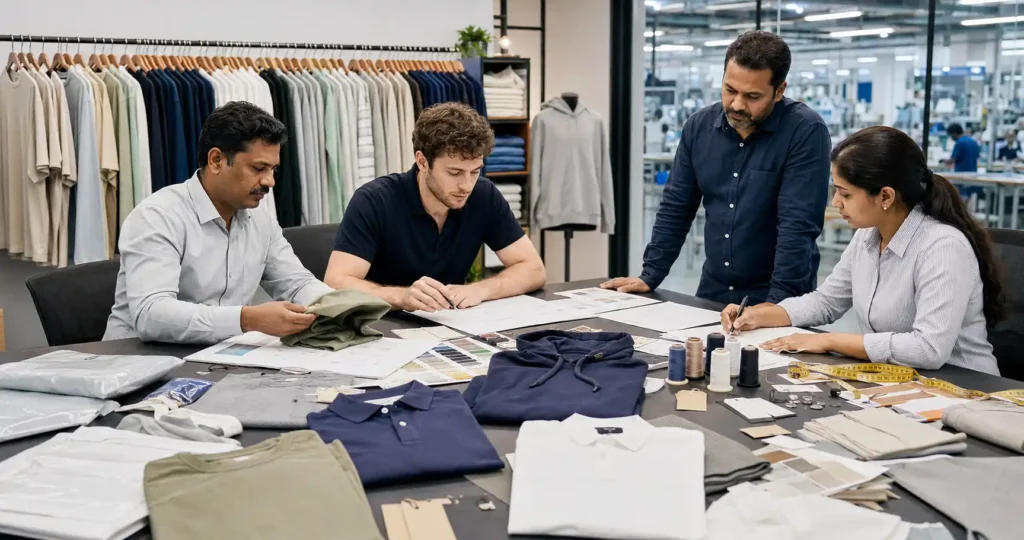
A detailed tech pack is particularly useful because it establishes a common technical reference for the buyer, product-development team and manufacturing unit.
When specifications are incomplete, quotations from different suppliers may be based on different assumptions. A lower price may therefore represent a different fabric, construction or finishing standard rather than a genuinely more competitive production cost.
Choose a Supplier With Relevant Product Expertise
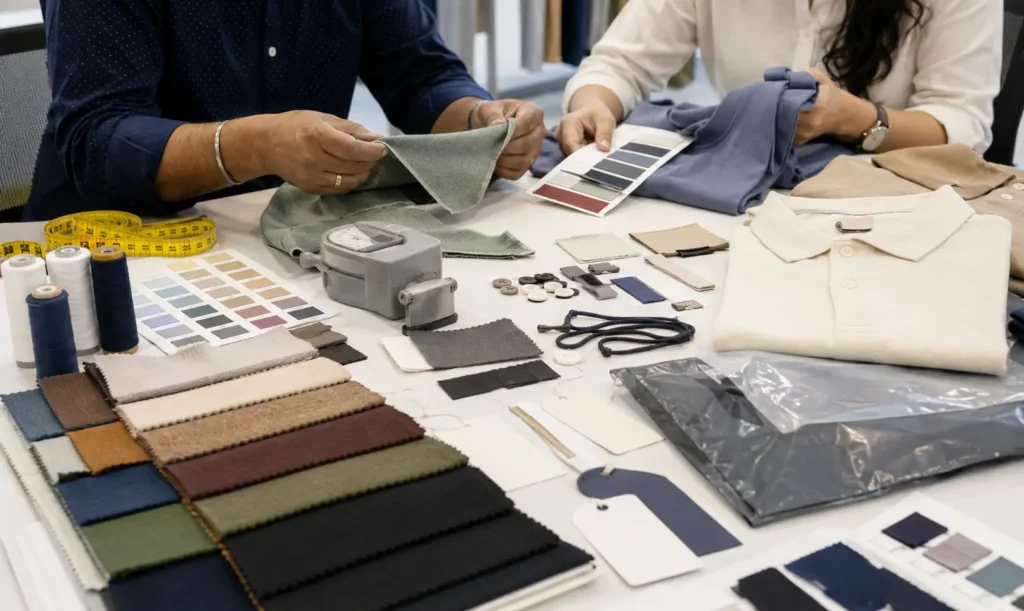
Apparel manufacturing is highly specialized.
A production unit experienced in knitted T-shirts may not necessarily be the right choice for structured woven garments, technical activewear or specialized outerwear.
For knitwear programs, buyers should look for relevant experience with the actual product categories they intend to manufacture.
These may include:
- T-shirts
- polo shirts
- hoodies
- sweatshirts
- joggers
- loungewear
- sleepwear
- kidswear
- selected corporate apparel
Product specialization affects fabric knowledge, machinery, construction methods, finishing and quality-control procedures.
This is one reason Tiruppur is particularly relevant to international buyers sourcing knitted apparel from India.
Fabric Sourcing Is the Foundation of Private-Label Production
The garment begins with the fabric.
Two T-shirts that look almost identical in a photograph can perform very differently depending on yarn quality, fabric construction, GSM, knitting, dyeing and finishing.
For knitted private-label apparel, common fabric options include cotton single jersey, pique, rib, interlock, French terry and fleece. Depending on the product, cotton-rich blends and selected cellulosic fibres may also be considered.
Buyers should define or approve characteristics such as:
Composition: cotton, cotton-rich blends or other appropriate fibres.
GSM: the approximate fabric weight required for the intended garment.
Construction: single jersey, pique, rib, interlock, French terry, fleece or another structure.
Colour: standard colour, lab-dip development, melange or yarn-dyed requirements.
Finishing: processes selected according to the desired hand feel, appearance, shrinkage and performance.
Fabric should therefore be evaluated as a technical component of the product rather than simply as a colour choice.
Sampling Converts the Specification Into a Physical Garment
Sampling is one of the most important stages in private-label manufacturing.
A sample allows the buyer to evaluate whether the proposed fabric, measurements, fit, construction, workmanship and branding correspond with the intended product.
Depending on the complexity of the program, development can involve different sample stages.
A buyer may need to review:
- fabric and colour
- garment measurements
- overall fit
- neckline or collar construction
- sleeve and body proportions
- stitching
- print or embroidery
- labels and trims
- wash performance
- final appearance
Changes identified during sampling should be documented before bulk production.
Approving a garment visually without confirming measurements and construction can create unnecessary risk when production quantities increase.
Understand MOQ Before Finalizing the Collection
Minimum order quantity is frequently misunderstood in private-label apparel sourcing.
MOQ is not determined only by sewing capacity. Fabric knitting, dyeing, yarn availability, colour quantities, specialized trims, printing and finishing can all influence the workable minimum.
For example, producing several colours in very small quantities may be difficult when each colour requires separate fabric processing.
Brands should therefore discuss MOQ at the beginning of development rather than after completing multiple samples.
Where possible, simplifying the initial collection can make production more practical. A new brand may achieve a more workable program by concentrating volume into fewer styles or colours rather than dividing a small total quantity across a large collection.
Private Label Branding Extends Beyond the Logo
Private-label development is more than adding a logo to a finished garment.
Brand identity may appear throughout the product and packaging.
Depending on the program, customization can include:
- woven neck labels
- printed neck labels
- wash-care labels
- size labels
- hangtags
- embroidery
- screen printing
- DTF or DTG printing
- customized trims
- branded packaging
Each component should be approved before bulk production.
Labels and packaging also need to reflect the requirements of the destination market and the buyer’s own product specifications.
Quality Control Should Continue Throughout Production
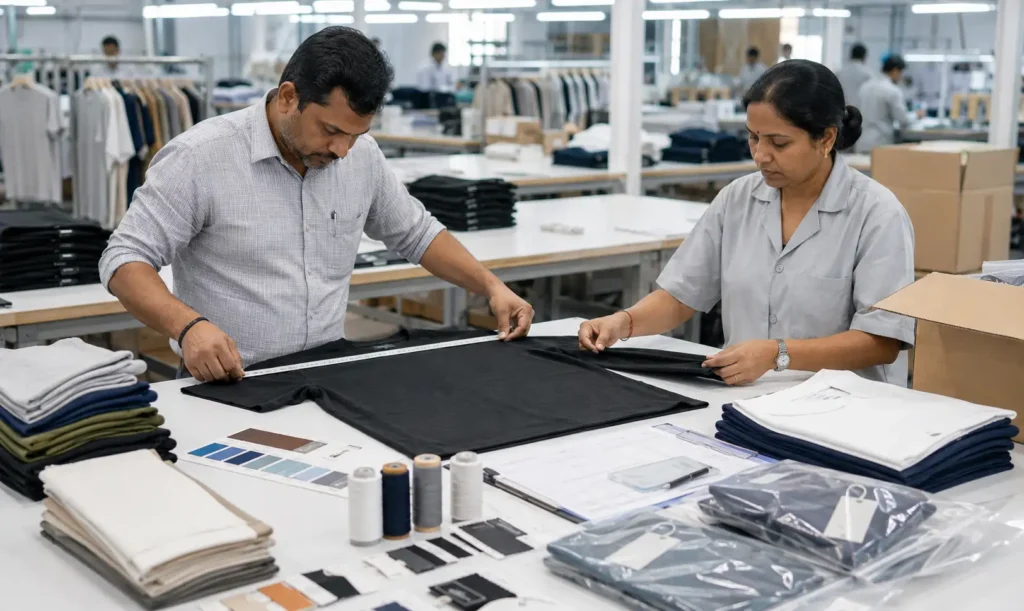
Quality control should not begin only when finished cartons are ready for shipment.
A stronger process establishes approved references before production and checks critical requirements as manufacturing progresses.
Important control points can include fabric approval, colour and shade, measurements, cutting, sewing construction, print or embroidery placement, workmanship, labels, finishing and packing.
Finished garments can then be checked against the approved specifications before shipment.
For international buyers, the important question is not simply whether a supplier says that it performs quality control. Buyers should understand what is checked, when it is checked and what approved reference is used for comparison.
Production Coordination Matters as Much as Production Capacity
Large production capacity does not automatically create a reliable private-label program.
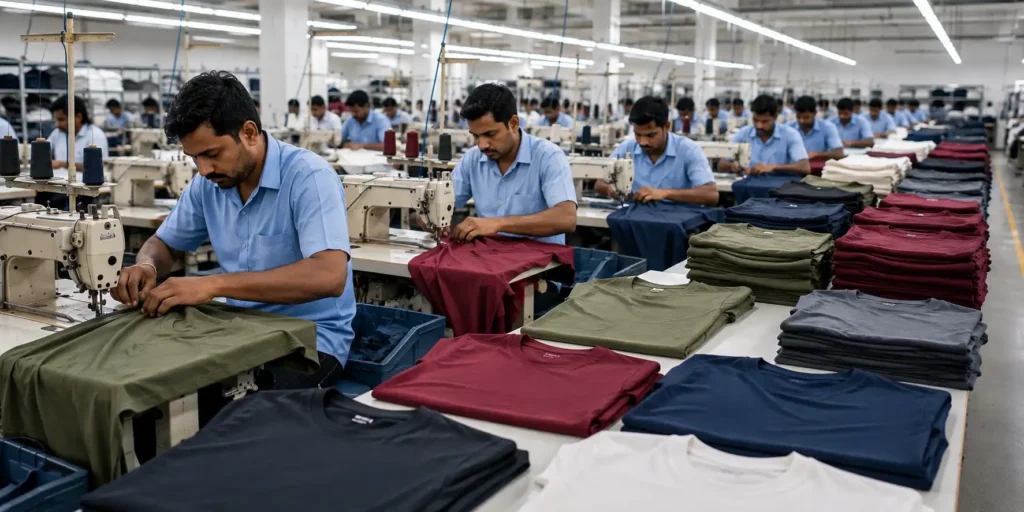
Private-label orders often involve multiple processes that must happen in the correct sequence.
Fabric development may involve one specialist, printing another, embroidery another and packaging another. The garment manufacturer must then coordinate these processes around the production schedule and approved specifications.
For overseas buyers, clear production coordination becomes particularly important because they cannot physically supervise every stage.
A defined point of contact can simplify communication between the buyer, fabric suppliers, development teams, manufacturing partners and quality-control personnel.
Packaging Should Be Planned Before Production Is Finished
Packaging is sometimes treated as a final-stage decision, but international brands should define it earlier.
Requirements may include garment folding, individual bags, size stickers, hangtags, barcode labels, carton assortment, carton markings and other buyer-specific packing instructions.
Packaging decisions can affect material sourcing, cost and lead time.
Confirming these requirements early reduces the risk of finished garments waiting for labels, tags or packaging materials before shipment.
Understand the Export and Shipping Arrangement
International buyers should also establish the commercial and shipping terms before confirming production.
Two commonly discussed terms are FOB and DDP, although the appropriate arrangement depends on the destination, shipment and commercial agreement.
Under an FOB arrangement, responsibilities transfer according to the agreed port and Incoterm conditions. A DDP arrangement involves a broader delivered solution, subject to destination-country requirements and the agreed responsibilities of the parties.
Buyers should confirm:
- quotation currency
- Incoterm
- nominated port or destination
- packing requirements
- shipping method
- required export documents
- who is responsible for freight
- who is responsible for import clearance and duties
These details should not be left until the garments are ready to ship.
Why Tiruppur Is Relevant for Private-Label Knitwear
Tiruppur in Tamil Nadu is one of India’s major knitwear production clusters.
Its importance comes from the concentration of interconnected apparel capabilities rather than from garment sewing alone.
The wider ecosystem supports areas such as yarn, knitting, fabric processing, garment manufacturing, printing, embroidery, finishing, packaging and export-related services.
For international brands developing knitted apparel, this concentration can make it easier to coordinate multiple stages of a private-label program within the same manufacturing region.
Tiruppur is particularly relevant for categories such as T-shirts, polo shirts, sweatshirts, hoodies, loungewear, sleepwear, kidswear and other knitted garments.
Manufacturer, Factory or Sourcing Partner?
International buyers may work directly with a manufacturing unit or through an apparel sourcing and manufacturing partner.
Neither structure is automatically better for every project.
Direct factory relationships can work well when the buyer has clearly established specifications, substantial volumes and the internal capability to manage development, materials, quality and production communication.
A sourcing partner can be useful when the buyer requires broader coordination across fabric sourcing, development, sampling, manufacturing-partner selection, quality control, private-label components, packaging and export preparation.
The important consideration is whether the chosen model provides appropriate technical capability, transparency and control for the specific product.
How Mirthuni Apparel Supports Private-Label Programs
Mirthuni Apparel provides apparel manufacturing and sourcing support from Tiruppur, India, with manufacturing coordinated through selected manufacturing partners according to the requirements of each program.
Support can include:
- review of product requirements
- fabric and trim sourcing
- product-development coordination
- sampling
- private-label customization
- manufacturing-partner coordination
- production follow-up
- quality-control coordination
- packaging preparation
- export and shipment support
The primary focus is knitted private-label apparel for international brands, retailers, wholesalers and importers seeking structured development and production coordination from Tiruppur.
Project feasibility, MOQ, pricing, fabric availability and production lead time should be confirmed against the specifications of each enquiry.
Final Checklist for Private-Label Apparel Manufacturing in India
Before confirming a private-label apparel program, international buyers should verify:
- product specifications are clearly documented
- the supplier has experience with the relevant garment category
- fabric composition, construction and GSM are approved
- sample measurements and fit are confirmed
- MOQ is understood by style and colour
- printing, embroidery, labels and trims are approved
- quality-control checkpoints are defined
- packaging requirements are documented
- production communication responsibilities are clear
- commercial and shipping terms are confirmed
The most reliable private-label manufacturing programs are built through specification control and coordination rather than price comparison alone.
For brands sourcing from India, evaluating the complete development and manufacturing process provides a stronger foundation for consistent quality, repeat orders and long-term supplier relationships.
FAQ
Private-label apparel manufacturing involves producing garments according to a buyer's specifications so the finished products can be sold under the buyer's own brand. The program can include fabric sourcing, garment development, sampling, branding, labels, packaging and production.
India offers access to established textile and apparel manufacturing clusters, diverse fabric capabilities, product-development resources and export-oriented production. The appropriate sourcing location depends on the garment category and technical requirements.
Provide the garment type, fabric composition, GSM, design or reference, measurements, size range, colours, quantities, branding requirements, labels, trims, packaging and destination market. A detailed tech pack is preferable when available.
Common knitted constructions include cotton single jersey, pique, rib, interlock, French terry and fleece. The appropriate construction, composition and GSM depend on the garment and required performance.
Yes. Sampling allows the buyer to evaluate fabric, measurements, fit, construction, workmanship, branding and finishing before approving bulk production.
MOQ can be influenced by fabric knitting and dyeing quantities, colour requirements, yarn availability, garment style, trims, printing, embroidery and other production processes.
Depending on the supplier's capabilities, a private-label program can include woven or printed labels, wash-care labels, size labels, hangtags, customized trims and buyer-specific packaging.
Quality control should use approved specifications and samples as references and can include checks of fabric, measurements, construction, workmanship, printing or embroidery, labels, finishing and packing at appropriate stages of production.
Tiruppur has an established knitwear ecosystem supporting knitting, fabric processing, garment manufacturing, printing, embroidery, finishing, packaging and export-related services, making it relevant for many knitted apparel programs.
A direct factory relationship focuses primarily on manufacturing, while a sourcing partner may coordinate additional functions such as fabric sourcing, product development, sampling, manufacturing-partner selection, quality control, packaging and export support.